Tag: training
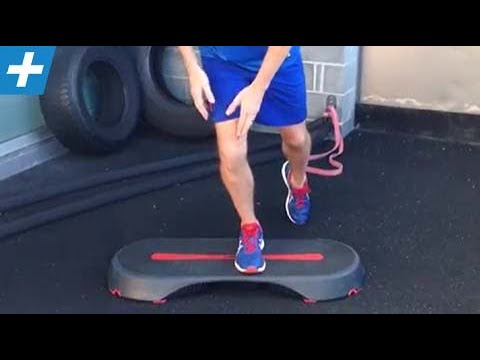
Step Down Pt.2 – for knee rehab and glute strength | Feat. Tim Keeley | No.69 | Physio REHAB
admin123 0 Comments Back Pain CHRONIC PAIN
All title today we 39, re doing the step down part two now this. Is taking into account all the stages from regression right through to stepping down the BOSU and it’s, one of my favorites for knee rehab, good rehab knee ache, so let’s start off with a few cases fundamentals with the steps down. Remember it’s like a one legged hunker, but what we’re trying to do is control the e centric phase of steps down off the box, but not putting weight through the back leg. So we’re going to keep heavines on the breast leg and then stepping back up now, when you start off this exercise, some people that have knee agony or they’re just out of surgery or they’ve, got a little bit of weakness through The VMO a lot of weakness through the glutes, so we have to try and change the practice to accommodate that first things. First, what you’re going to make sure of whenever you’re doing the steps down, is your knee? The middle of your knee needs to the other, the middle of your foot. Now the midriff of your foot is between your second and third toe so that’s on the outside your big-hearted toe. So the best thing to think about is when you’re doing a steps down, think about the knee on the outside of your big-hearted toe. Alright, so you should always be able to see your big-hearted toe now. The other thing so that’s that’s hinder that in line and that’ll teach you not to go your nin, because if your knees rolling in you ,’ ll see it cross over your large-scale toe. So you always got to try and keep it out, and sometimes it goes in as a matter of. Is it my lateral rotators that a week here, as are my glutes, that a few weeks here, it’s not definitely a week VMO that moves it in that’s usually up the top now and the trendy okay, so knee adjustment is important. The hip alignment is really important as well. So when you start off you ,’ ve got to have your trendies, as in the ASIS on either side the level of the pelvis it’s got to be level. At least I’d. Preferably, it be a little bit higher on the opposite side, then you really know that you’re using your glute on this side. Your glue, meat and men. Now there you’re walking muscles. So you imagine I’m walking I’m going upstairs or I’m running that statu there. I need these muscles to keep my hip high-pitched, so I are truly clear my leg through the anchor that’s why we’ve got them all right. So when I’m walking, if I don’t know place my sky, I’ll scuff my paw, so it’s a good way to think about. Can I preserve my pelvis high to clear my leg through the soil and this position needs to be held the entire term when I’m going through that steps down that reverse doodly-squat? So if I was down here and I sag you’ll appreciate, my leg comes in a little bit. So if you’re using a mirror in front of you, you should ever see your legs parallel and not slam in that way. Let that leg droop, because you then, if that happens, you know your leg is descent. Your pelvis was putting down. So what I mean is, if I’m here, you don’t want to be throw. That nature. When I go into a diddly-squat – and you see this a lot when people doing strengthened in or step downs winding it squats, they’re flatten their pelvis. Now, if you stop your pelvis okay, you’re not doing any is currently working on your glute and then the femur is going to internally rotate what it’s going to drop into valgus, which is going to give you their knee agony, which is what we’Re trying to avoid in the first place so very important that you save that pelvis stage all right throughout the entire movement. Now one thing that can realize you quit your pelvis is, if “youre trying” reach for the field, okay, because some people run out of range in the trendy, so they’ll squatting down, they’ll run out of range now and then they’ll. Just drop alright, so you’re going to make sure that you actually bend at the hip to do the movement and sometimes they can do it because they’ve got frailties. So let’s is the beginning with the first step. We, like the regression grade and this two things. The regression of a1 is a toe tap step down, and one is a regression step down now. The toe tap step down is going into a position where you’re, actually sitting back, but you’re , not letting your knees come forward. Okay. So if you look at, if you come in here when you have a look at us, so when I stand on one leg, when I sit down to the position, be seen to what extent my knee remains relatively, where it is, I’m not letting my knee come forward. Like a ordinary steps down, I’m just prevent it there and sitting backwards now from there. I’ve got to try and are of the view that static situate. Okay, tap my paw on the back, tap it on the front and the heel tap it on the back. So I’m not actually moving on my heavines bearing leg. I’m trying to hold this isometric contraction of my knee my quad here my hammy, my glute saving my pelvis statu and merely gotta go back and forward it’s actually quite hard. Quite taxing for that load standing feature, okay, so that’s. The first thing you do so you shouldn’t get any knee pain with that because you’re not moving in need all right and your practise, your VMO, to get a bit of static control, your training, a lot of glute static dominance, and that structures That basi for you to be able to go okay, I can get down it and I can laden and wait bear so the second level will level 1 duty. Two is the regression where you go to the same position, but you move into the position and then you move away okay, so you steps down, but I’m not allow that knee come forward. So I’m moving more of the trendies of doing more glute succeed that I am knee work now. Of direction, your glutes are going to get stronger than your knee at this degree, but you have to because if you’ve got knee aching, you’re. Currently, there knee go forward, so it’s better designed to strengthen the trendy, do that stronger white-hot and give the knee gradually stronger and while there are encompass and gets better, then you can move into stage two which is going from the step down regression like That to actually letting that knee be forwarded, so I’m in more of a regular hunker predicament. So if you imagine like, if I was in a squatting okay, I’m doing the same thing, but I’m just doing it on one leg: alright, and you can call it a one legged hunker if you like, but we call it a step down Because that’s, the free movement of persons where develop is their ease, injure ensure and then coming back up, so we’re not actually stepping up okay, we’re stepping down and then returning , no and just letting that knee come forward. Now you can choose how much your net knee comes for you can. If you’ve got a little bit of aching later coming for Livermore, so you sit below the ache and as you get better and that improves you can get that knee going forward and forward and forward and tell us the right inclination, just like you would Do in a squat all right now, you’re level. Three, all you need to work on is putting some sort of resistance to the movement of the knee. I don’t mean lading the body there -‘s no spot putting weights on until you ,’ ve worked on the lateral component of it. So getting a stripe like this and putting it around got God to see the breast knee, but it’s the outside of your knee okay. So at the outside of your knee and you’re going to stand on that leg and then try and balance and again I’ve got to try and continue my knee on the outside of my toe all right and then the band is trying to Pull me in, I’m trying to find it, so I needed that will stir you work hard now and these new challenges me laterally. So when I go in to step down okay, I’m trying to resist the band, and that gives me more manipulate right up here. More limit, duty that I need to do is that’s about the control of the knee. Now that I’ve got the backbone up to handle the squad datum, he’s got the strength up before and now I’m going to work on my power with a better resist laden, all right and then you’ll, verify on rank four. We go to a BOSU, I mean you can use the wobble committee or a BOSU doesn’t really matter, and this is really working on a lot of motor control now, so we build our forte and a little of control there, and then we sharpens precisely On power at the end stage right because you know you can do all the squats you like to get the strength up higher and higher, but you still got to work on control for the best rehab and your knee so offset on there and the same thing Knee on the outside of your toe stepping down tapping the floor coming back up and notice, I’m not put heavines through my back leg. I’m keeping the weight on the BOSU and I’m trying to keep it level. Doesn’t matter. If it moves a little bit as long as my knee remains quite stable, doesn’t roll in okay and same with my trendy again, keeping that hip nice and position , not making it dip down and coming back up and that’s it