Category: Back Pain
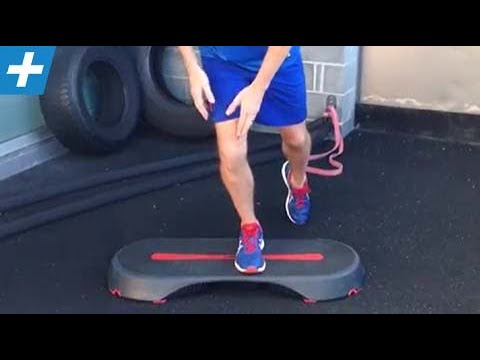
Step Down Pt.2 – for knee rehab and glute strength | Feat. Tim Keeley | No.69 | Physio REHAB
admin123 0 Comments Back Pain CHRONIC PAIN
All title today we 39, re doing the step down part two now this. Is taking into account all the stages from regression right through to stepping down the BOSU and it’s, one of my favorites for knee rehab, good rehab knee ache, so let’s start off with a few cases fundamentals with the steps down. Remember it’s like a one legged hunker, but what we’re trying to do is control the e centric phase of steps down off the box, but not putting weight through the back leg. So we’re going to keep heavines on the breast leg and then stepping back up now, when you start off this exercise, some people that have knee agony or they’re just out of surgery or they’ve, got a little bit of weakness through The VMO a lot of weakness through the glutes, so we have to try and change the practice to accommodate that first things. First, what you’re going to make sure of whenever you’re doing the steps down, is your knee? The middle of your knee needs to the other, the middle of your foot. Now the midriff of your foot is between your second and third toe so that’s on the outside your big-hearted toe. So the best thing to think about is when you’re doing a steps down, think about the knee on the outside of your big-hearted toe. Alright, so you should always be able to see your big-hearted toe now. The other thing so that’s that’s hinder that in line and that’ll teach you not to go your nin, because if your knees rolling in you ,’ ll see it cross over your large-scale toe. So you always got to try and keep it out, and sometimes it goes in as a matter of. Is it my lateral rotators that a week here, as are my glutes, that a few weeks here, it’s not definitely a week VMO that moves it in that’s usually up the top now and the trendy okay, so knee adjustment is important. The hip alignment is really important as well. So when you start off you ,’ ve got to have your trendies, as in the ASIS on either side the level of the pelvis it’s got to be level. At least I’d. Preferably, it be a little bit higher on the opposite side, then you really know that you’re using your glute on this side. Your glue, meat and men. Now there you’re walking muscles. So you imagine I’m walking I’m going upstairs or I’m running that statu there. I need these muscles to keep my hip high-pitched, so I are truly clear my leg through the anchor that’s why we’ve got them all right. So when I’m walking, if I don’t know place my sky, I’ll scuff my paw, so it’s a good way to think about. Can I preserve my pelvis high to clear my leg through the soil and this position needs to be held the entire term when I’m going through that steps down that reverse doodly-squat? So if I was down here and I sag you’ll appreciate, my leg comes in a little bit. So if you’re using a mirror in front of you, you should ever see your legs parallel and not slam in that way. Let that leg droop, because you then, if that happens, you know your leg is descent. Your pelvis was putting down. So what I mean is, if I’m here, you don’t want to be throw. That nature. When I go into a diddly-squat – and you see this a lot when people doing strengthened in or step downs winding it squats, they’re flatten their pelvis. Now, if you stop your pelvis okay, you’re not doing any is currently working on your glute and then the femur is going to internally rotate what it’s going to drop into valgus, which is going to give you their knee agony, which is what we’Re trying to avoid in the first place so very important that you save that pelvis stage all right throughout the entire movement. Now one thing that can realize you quit your pelvis is, if “youre trying” reach for the field, okay, because some people run out of range in the trendy, so they’ll squatting down, they’ll run out of range now and then they’ll. Just drop alright, so you’re going to make sure that you actually bend at the hip to do the movement and sometimes they can do it because they’ve got frailties. So let’s is the beginning with the first step. We, like the regression grade and this two things. The regression of a1 is a toe tap step down, and one is a regression step down now. The toe tap step down is going into a position where you’re, actually sitting back, but you’re , not letting your knees come forward. Okay. So if you look at, if you come in here when you have a look at us, so when I stand on one leg, when I sit down to the position, be seen to what extent my knee remains relatively, where it is, I’m not letting my knee come forward. Like a ordinary steps down, I’m just prevent it there and sitting backwards now from there. I’ve got to try and are of the view that static situate. Okay, tap my paw on the back, tap it on the front and the heel tap it on the back. So I’m not actually moving on my heavines bearing leg. I’m trying to hold this isometric contraction of my knee my quad here my hammy, my glute saving my pelvis statu and merely gotta go back and forward it’s actually quite hard. Quite taxing for that load standing feature, okay, so that’s. The first thing you do so you shouldn’t get any knee pain with that because you’re not moving in need all right and your practise, your VMO, to get a bit of static control, your training, a lot of glute static dominance, and that structures That basi for you to be able to go okay, I can get down it and I can laden and wait bear so the second level will level 1 duty. Two is the regression where you go to the same position, but you move into the position and then you move away okay, so you steps down, but I’m not allow that knee come forward. So I’m moving more of the trendies of doing more glute succeed that I am knee work now. Of direction, your glutes are going to get stronger than your knee at this degree, but you have to because if you’ve got knee aching, you’re. Currently, there knee go forward, so it’s better designed to strengthen the trendy, do that stronger white-hot and give the knee gradually stronger and while there are encompass and gets better, then you can move into stage two which is going from the step down regression like That to actually letting that knee be forwarded, so I’m in more of a regular hunker predicament. So if you imagine like, if I was in a squatting okay, I’m doing the same thing, but I’m just doing it on one leg: alright, and you can call it a one legged hunker if you like, but we call it a step down Because that’s, the free movement of persons where develop is their ease, injure ensure and then coming back up, so we’re not actually stepping up okay, we’re stepping down and then returning , no and just letting that knee come forward. Now you can choose how much your net knee comes for you can. If you’ve got a little bit of aching later coming for Livermore, so you sit below the ache and as you get better and that improves you can get that knee going forward and forward and forward and tell us the right inclination, just like you would Do in a squat all right now, you’re level. Three, all you need to work on is putting some sort of resistance to the movement of the knee. I don’t mean lading the body there -‘s no spot putting weights on until you ,’ ve worked on the lateral component of it. So getting a stripe like this and putting it around got God to see the breast knee, but it’s the outside of your knee okay. So at the outside of your knee and you’re going to stand on that leg and then try and balance and again I’ve got to try and continue my knee on the outside of my toe all right and then the band is trying to Pull me in, I’m trying to find it, so I needed that will stir you work hard now and these new challenges me laterally. So when I go in to step down okay, I’m trying to resist the band, and that gives me more manipulate right up here. More limit, duty that I need to do is that’s about the control of the knee. Now that I’ve got the backbone up to handle the squad datum, he’s got the strength up before and now I’m going to work on my power with a better resist laden, all right and then you’ll, verify on rank four. We go to a BOSU, I mean you can use the wobble committee or a BOSU doesn’t really matter, and this is really working on a lot of motor control now, so we build our forte and a little of control there, and then we sharpens precisely On power at the end stage right because you know you can do all the squats you like to get the strength up higher and higher, but you still got to work on control for the best rehab and your knee so offset on there and the same thing Knee on the outside of your toe stepping down tapping the floor coming back up and notice, I’m not put heavines through my back leg. I’m keeping the weight on the BOSU and I’m trying to keep it level. Doesn’t matter. If it moves a little bit as long as my knee remains quite stable, doesn’t roll in okay and same with my trendy again, keeping that hip nice and position , not making it dip down and coming back up and that’s it


Back Pain: KOSMODISK® Dec 2011
admin123 0 Comments Back Pain CHRONIC PAIN
-[ David] One of the great things about InDesign is that it’s so rich, so deep that there’s always more to learn. If you want to go deeper with InDesign, I have several recommendations. First check out the website that I facilitate ranged, CreativePro.com. “Hes also” the new dwelling for InDesign Secrets. There are thousands of gratuities and stunts and more every week. Plus we have a free InDesign podcast, live online incidents and more. If you sign on for a payment body, you’ll get our brochure “InDesign Magazine” every month. This is a great resource written by InDesign experts all over the world. It’s distributed as a PDF and you can download a free inquiry issue from CreativePro. If you use InDesign for professional creation, I definitely recommend you check out the InDesign Conference, which is part of CreativePro week. Of trend, you should definitely search through the online training library to find more InDesign entitlements. For instance, search for the “InDesign Secrets” title that I do with Anne-Marie Concepcion. It’s chock full of cool InDesign gratuities. Want to go deeper into any of specific topics I discussed in this course? Then check out my other entitles, including “InDesign: Data Merge and Database Publishing, ” “InDesign: Working with Photoshop and Illustrator, ” or “InDesign: Color Management.” Finally, please follow me on LinkedIn or Twitter, and also check out the InDesign Secrets radical that I help manage on Facebook. Thank you for coming along with me on this mad journey through Adobe InDesign. I hope you enjoyed the trip as much as I have. Sure, InDesign is an industrial fortitude motif and production tool, but it’s also a lot of fun. Enjoy playing with it. After all, playing with any software is the best way to learn it. Have fun and joyful InDesigning.is constant back anguish and stiffness forming your life lamentable for 20 years Cosmo disk has been helping back soreness sufferers looks just like you 2 million people have exercised Cosmo dis worldwide the unique shape of the Cosmo disc system of ribs rubs your spine like a healer you with soothing pressure you receive constant rub to the related expanse it’s cozy simple and effective you could feel good again and it’s only 149 95 say yours now at Cosmo viscom speck au or request 1 301 5 to double for 9.

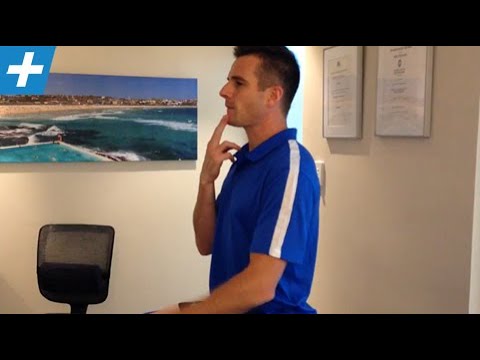
Chin tucks (retraction) for neck pain and spine posture | Feat. Tim Keeley | No.40 | Physio REHAB
admin123 0 Comments Back Pain CHRONIC PAIN
ok today we’re talking about simple cervix unfolds to do when you’ve got cervix sorenes a stiff neck headaches that’s a thing especially for people who are working at a workstation computers that’s then with truly poor posture in their prickle and they have that forward hip carry so today’s usage announced retraction or chin tucks so what you need to be doing is if you’re at home and you’re sitting on the sofa or you’re sitting in the car or merely sitting on a terrace that’s a thing I crave “are you doin ” these little chin folds but you’ve got to make sure you’re in a good sticker aligned at first you can be sitting in the grab is like this and expect to do the chin fold it’s not going to work so what I miss you acquiring sure of is you are in a neutral prickle here alright so you’re really making sure that your prickle is in this upright position then you’re just not cause them under adaptable by point and if anything you can add a little bit of core switch on within our pelvic storey shoulders come before they’ve got to be in this neutral situate as well as it’s down the back a little bit and then your top is what we’re going to work on so if your backbone from here down to sit really well you will do really well with this exercise so what I require you to imagine is when you are facing forward okay you’ve got to keep your eyes on something so keep your eyes there not something as an attention elevation and I like putting two things on the chin so two thing is here restrain my hearts height and what I’m going to try and do is just gently pull my head away from my fingers and then return inducing sure you’re not going backwards like this you’re not going to I know what you go backwards like that and I do conceive I require you going down and lengthen out too much it’s simple retraction is like your head is just sliding back on your sticker alright so here now just think about this slide back on the prickle so you’ve actually got to keep it level as you go backwards and what that’s doing is upper cervical flexion and lower cervical postponement which is the opposite of slumping so here I’m in lower cervical flexion and upper spinal expansion so in this position I’m exert pressure posterior on my lower disc summertime check five six seven which is always the ones that are going to go first with bad posture as far as bulging and degenerative difficulties they’re always like this and I’m jamming by upper quantity for an extension I’m ramming those facet braces and it is sitting like that so it’s basically the complete opposite okay so this is the bad berth get out of that posture for a start but then the refusal is go right back to the terminated opposite of what you live so there’s extreme there the other extreme is coming into here now when you’ve got major disc problems with physio we get them doing retraction extension that’s a little bit more advanced today is what it ever about representing sure you’re doing simple practises like retraction chin stow to try to improve your one posture the two mobility through your backbone and facilitate stretch forth does those braces out of that jam prestige which is a great break to do regardless so you’re doing this not a to make relaxed generates greater flexibility through that prickle and try and prevent that soft material slip of all its own position but you’re actually really each hour going out at positioning giving you a backbone a breaking from being on this but you shouldn’t be like that but if it is like this it brings out our position helps you reset that posture schooling you that you’ve got to be out of that point in back and at the same time you’re stretching and actually curing get better so make sure though with this one too that you’re not going back too far okay I want you to go back to where the grief is but don’t go into the pain so if you acquire some sorenes what I convey by as a unfold tendernes so if you feel fine you can go oh there it is okay that’s as far as you go don’t try Ram it backwards did you do too many of those you’re starting to start getting some referral down here perhaps you might be saying it refer of your old-fashioned headache that comes back to just go to the pain and back and when you get better it feels looser you’ll find you’ve got to go more and more and more so “ve been thinking about” it’s like reaching double chins and now and the other little trick is if you’re struggling a little bit keep the time on your ceiling your speak which is involves these throat muscles which is like the core stability for throats like your TA for your throat and your backbone your cervical spine to keep your tongue in a roofie lip I can’t talk going to do that and I would work on about pitches of ten so 10 repetitions per set maybe a couple of places and staff every hour so you’re coming out of its own position into this nice neutral backbone sitting position if you have to sit and work on that if you are eligible to stand even better so get your spot a lot of memory you can’t do it this position you can’t reject it I simply can’t get backwards so you’ve got to get a good position here so if you’re a person who stands at work you want to be in now and in that position too because there’s a lot of standing occupations a lot of standing postures that people are looking forward in doing this especially physio to where they’re looking forward about hittings sheering for now that’s a posture where they extend oh right before that and certainly stress here so you need to be into this position now and plucking back

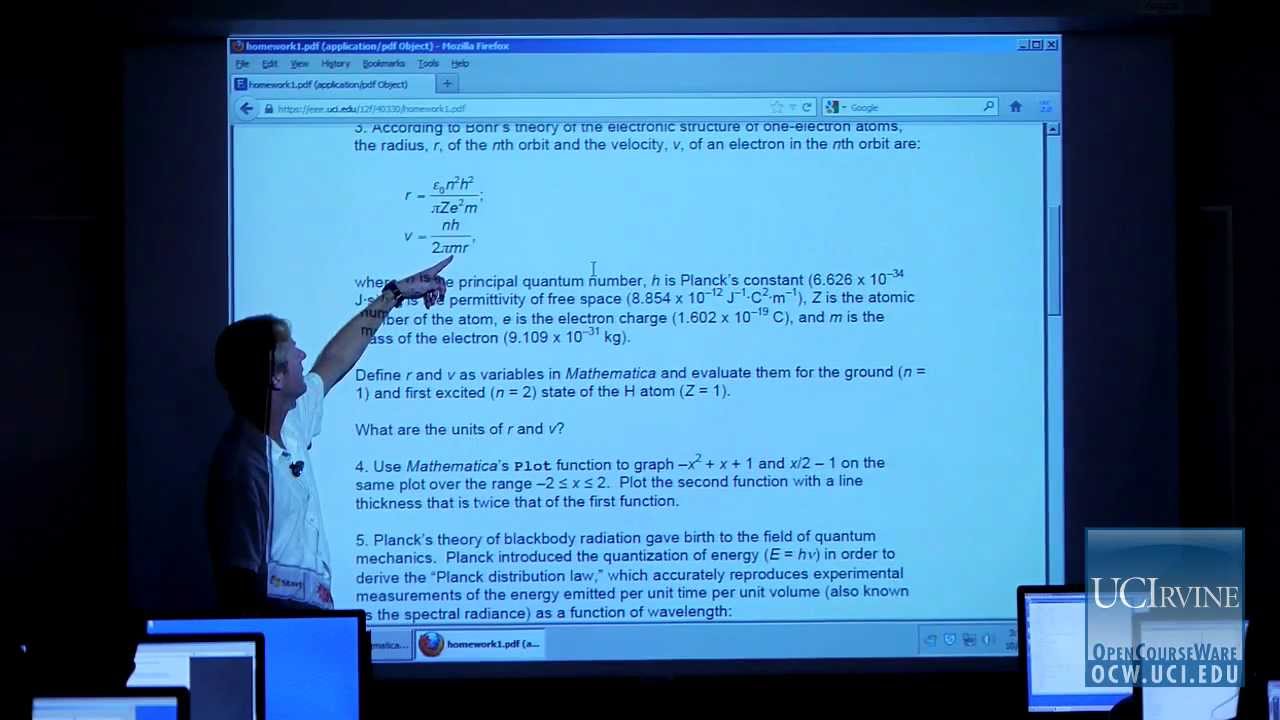
Scientific Computing Skills 5. Lecture 02.
admin123 0 Comments Back Pain CHRONIC PAIN
I thought I’d start out by asking if anyone has any questions or anything you want to discuss before we move on everybody got the homework then I hope not you haven’t even seen it yet okay so today we’re going to start out with an introduction to one of the most useful things that you’ll learn how to do using Mathematica and that is to make nice plots right so we all know a scientists that cleverly plotting data is a very nice way to convey a message and the message is best conveyed when you have a very meaningful and informative plot and so what I’m going to do today is introduce you to some a few features that will help you to begin to make nice-looking XY plots soap lots of functions of one variable and then a little later in the course will learn how to make 3d and even 4d plots and like I say I think this is one of the more valuable things that you’ll learn how to do all right so we’re going to start with a very simple example and what I’m going to do is show you how to plot a simple function so it’s going to be the sine function and we’re going to do it over one cycle so it’ll be from 0 to 2 pi alright and the name of the command is called plot this is the very simple plotting command for plotting a function either one that exists in Mathematica or one that you’ve defined and we’ll learn a little later today how to define our own functions and in its simplest form all you do is you say what’s the function you want to plot so in our case it’s going to be sine X and don’t forget that arguments to functions go in square brackets and then we need to give a range okay and by the way the variable doesn’t have to be X this is just a very common one to use it could be why it could be t it could be a it could be your name just so long as you’re consistent in referring to it alright so then I put a comma and then I put a range and this is going to be our first introduction to the use of the curly braces and as I think I previewed to you last time there are lots of different ways to use parenthesis braces and square brackets in Mathematica and braces are generally used to enclose lists and in this case we need to make a list of what’s the variable so we’ve said sine X so we should put X and then we put the minimum and maximum value over which we want X to be plotted so I’m going to go from 0 to 2 times pi remember pi is capital P lowercase I all right and then I close my square brackets and I enter and if you did it right congratulations because you have your first plot in Mathematica and so let me start by thing just a couple of things about it so first of all there is unless you specify otherwise a fixed dimension to the plot okay so there’s a mathematic it decides to use a certain amount of real estate in the vertical direction and then it by default uses about 1.6 times that in the X dimension so you get this rectangular plot and if you wish you’re certainly free to change this and many other attributes of the plot and I’ll show you a few and also show you how you can use documentation to unravel and uncover universe of possibilities for customizing your plot now the next thing is that notice that this sine wave fits very nicely within the plotting frame in general mathematica is going to try to fill as much of the plot as possible and so it’s going to adjust the limits in why so in this case from minus 1 to 1 that happens to be the limits of the function and X so as to use as much of the plotting frame as possible now this isn’t necessarily what you want and as we’ll see you can change that too okay and then the third thing that I’ll mention here is that mathematica has when you first fire it up a default coloring scheme that it uses and according to that default coloring scheme the first curve when you’re plotting plots in a given plot frame is going to come out blue once again this is something you can change and I’ll show you a couple of things ways that you can do that alright and then if you plot another curve which we’ll do in just a second it will come out in a different color okay so that’s kind of useful to know if you’re plotting multiple plots all right so this is very simple a plot and you can see that the command for it is is also very simple okay so what can we do now well this is a good time for me to emphasize something that you should start thinking about all the time which is as soon as you do anything significant as you’re working you should save your file all right so if you haven’t already seen how to do that let’s go ahead and do it now all right so what we’re going to do is uncover the menu here and then I’m going to say file save as and if i click on local disk there’s a folder called save here ok so in on these lab computers you’re allowed to save files in that directory alright so let’s go ahead and click on that and then you can put in a name alright so yesterday I saved a file called Doug 1nb today i’ll call it Doug 2nb you can call it whatever you want ok now another very important thing to keep in mind is that this file may not live very long after you leave the class okay in principle there they wipe these disks all these safe here directories automatically every 24 to 48 hours so the next thing you should do especially when you’re working on your homework and double especially when you’re working on your exams is to save a backup copy okay so all of you have probably been using computers for some time now and I would bet that most of you have some tales of woe about how you’ve worked for hours on some precious document right near the deadline and the computer crashed or the program crashed and you lost everything and you cried and you were really stressed out about it so what I recommend that you do to avoid that stress is to get into the very very good habit of making backups now in this course I can recommend say three that are very easy and take a very small amount of time one is just immediately email a copy to yourself another is create a Dropbox on your eee that you have waiting for you and upload a copy of your file to your sake m5 miscellaneous Dropbox and another thing you can do is you can have a thumb drive at the ready in the computer and move a copy over to your thumb drive every now and then to create a backup in this class losing your data because of a computer crash is kind of like turning in at paper late because your dog ate it it’s not an acceptable excuse okay so I’ve given you three good ways to back up your data and I will assume from now on that you’ll be doing so all right okay now back to our plot so the next thing we’re going to see how to do is how to plot two functions at the same time okay so the way you do that is you make a list of the functions that you wish to plot and so a list is enclosed in curly brackets so I’m going to put some curly brackets around this and then I’m going to add the second function which in this case is going to be cosine coasts of X and now if i press enter you see that i have two curves now how do you know which is which well first of all you should know the difference between cosine and sine but if you didn’t you could infer it because as I said Mathematica always draws the first one with the blue and now you can see that by default it draws the second one as purple okay alright so there’s a an introduction to plotting more than one function now I want to show you another way to plot something so this in it will be if you like an arbitrary function of your choosing and then we’ll see how we can manipulate some of the attributes of the plot because this plot is not extremely informative right it doesn’t have any axes labels it doesn’t have any units it doesn’t have a title it doesn’t have a legend and unless you knew that the blue curve was first in the purple curve was second you may not know which is which so we’ll have a quick look at a few of the various ways that you can customize your plot to make it much more informative now before I do that though I want to just introduce you to the Documentation Center in Mathematica this is an extremely useful resource you may not use it too much in this class because as i said i’m going to show you how to do everything that you need to know in this class but in future you may want to look up how to do things or even in this class you may want to look up how to do some snazzy things that i’m not going to teach you just because there’s not enough time okay so what you do is you go under the help menu and then if you want you can search for anything you want okay so suppose you were interested in finding out more about the plot command the various options that you may have just type in plot hit return and notice that the first thing to come up here is documentation on the plot command but you also can take a tutorial if you want this is often available and there are additional guides like a general algorithms for data visualization etc etc so let’s go ahead and click on this and you see that you get first of all a very very basic introduction to the syntax of the command and then there’s this box that says more information and usually the useful stuff is in that box and so now if you look at this list of things these are all lists of options that you have for changing the attributes of your plot and it looks in pretty intimidating but most of the time you won’t care about most of those things I’m going to show you a few of these but I just want to let you know that this exists because you may be curious and one away sometime making your plot look really super cool ok now another thing that’s occasionally fun to look at is the examples all right so these just generally show some very simple things it’s by no means exhaustive and then down at the bottom they usually have something called neat examples so this one’s particularly cool because it’s actually a chemistry example and this may not look familiar to you but as soon as you take chem 131a you’ll know exactly what this is this happens to be a very nice representation of the first one two three four five six seven eight wave functions or I guess those are the probability amplitudes for the harmonic oscillator which is a simple model for molecular vibrations has anybody heard of that before aha are you in chem 131a or took it already know okay cool all right well you’ll you will get a massive coverage and introduction to that in chem 131a those of you who are in that course will be getting this probably within a couple of weeks from now alright but anyway you can see that if you really wanted you could make such a beautiful plot yourself in Mathematica and it’s not that complicated okay so that’s the Documentation Center and I encourage you to consult it from time to time like I say for the most part though you won’t need it in this course alright so next thing we’re going to do is we’re going to plot a function that we define ourselves in the plot command itself and then will manipulate it okay so here what I’m going to do is I’m going to say plot and then instead of typing in a predefined function like sine or cosine I’m going to plot a an equation for a parabola so it’s going to be 2 times X minus 4 quantity squared and then plus 1 okay and I’m going to plot this between x equals 3 and x equals 5 okay now what should this look like well it’s a parabola that’s going to be displaced along the x axis by 4 and along the y axis by one all right so let’s go ahead and let it rip and there you have it and as before mathematica chooses the limits while we chose the limits of X but chooses the limits of Y so as to fill up as much of the frame as possible with the graph and you can see that it’s chosen to use the lower why limit as one alright so there’s your parabola now what if you wanted to represent this in a different way so suppose you’re teaching someone how to interpret the equation of a parabola you might want to plot it in such a way that you can easily see that it is in fact displaced by 4 and x and x 1 and y in other words you may want to plot it so that the origin of the plot which here was chosen for us it happens to be 3 and X and 1 in Y is at zero and zero so you can really see that it’s displaced from the origin well that’s something that’s easy to change and this will be our first introduction to a long list of potential plotting options okay and it’s also an introduction to a new piece of syntax so if you want to change the origin or specify the origin you use an option called axes so its capital a and then origin with a capital o and then what you do is you use a narrow construction to point to where you want the origin to be and the way you make an arrow is you make a hyphen and then a greater than and then you put the coordinates that you want the origin to be at all right so I’m going to do 00 and I put those in curly braces all right and now if I enter that notice that it’s drawn the same curve but now the origin of the plot is where I told it 00 and now we can see very clearly by looking at the plot that it’s displaced the minimum is displaced by 4 and x + 1 and y ok so it’s exactly the same data but it’s plotted in such a way as to convey a new point all right it’s a very simple example of a manipulation that you may want to do from time to time to make your plot convey the message that you wish to convey okay now one more comment we’re going to be learning more and more of these options and you might be thinking man this is super confusing i don’t remember when to use curly braces when to use arrows what the words are that I’m supposed to be using to do this or the that don’t worry about that because the best way to make complicated constructions in Mathematica is to look at an example and then modify that example to do what you want to do and as I already emphasized last time anytime you’re doing anything in this class you will always have available to you the notes from the class and everything that I’m going to ask you to do there will be an example of that in the notes okay so don’t get bogged down memorizing all this impacts all right so another thing that you can do so here we’ve changed the origin okay another thing that we may want to do is we might want to actually manipulate the range over which the function is plotted okay so here mathematica chose to plot it between 0 and 3 and since we didn’t specify the range of X it uses the full range that we specify which was 325 plus if there’s an origin it also includes whatever’s between that and the origin okay so to customize the plot range what you can do so let’s go ahead and mouse this in here so ctrl-c to copy and then ctrl-v to paste so there’s another option which is called plot range so plot and then capital R a n GE and hear what we need to do is include two ranges 14 x and 1 for y so suppose in X I want to go between one and ten alright so that’s the X range now I have to include another set of curly brackets and then put a comma and specify the range of Y so Y I may wish to make let’s say just for fun Oh point 5 25 okay so if we enter whoops i need another curly bracket here then I get this plot okay so there’s no particularly compelling reason why I chose that range other than just to show you that you can change it and as you see the plot goes between 1 and 10 and 0 point five and five as we told it okay alright what else can we do well I’m going to start by going back to our very simple plot I’m just going to nuke all this stuff here and re-enter all right so so far all the pots we’ve made our pretty lame actually because we don’t know what we’re plotting all right so how can we specify what we’re plotting well one thing we can do is we can label the axes okay another thing we can do is we can actually give the plot a name or a title a label okay so now I’ll show you how to do that so these are additional options and the first one to label the axes is called axis label and then we need an arrow and then we need to make a list of two names one for the each axis and these should be in quotes because they’re going to be written exactly as whatever you put in the quotes so in the first set of quotes for the x axis I’m going to call it X and for the second axis Y I’ll call it Y now if you enter that you see that you have a microscopic label over here for X and another microscopic label here for why and I’ll show you in a moment how you can change the sizes and fonts and things like that okay now what about the label well we can put in another option it’s called ironically enough plot label arrow and then in quotes you put in whatever you want so you can say this is a cool plot or whatever you want to say about it you might want to say this is not a cool plot okay and if you enter that now you see that you have axes labels and a plot label now as you can see I wear reading glasses so for me these microscopic axes labels are very hard to see without putting my glasses on so if I want to be able to read my plot without my glasses I need to make those bigger so i’ll show you how to do that in addition i don’t know about you but i’m not a big fan of the times font which is the default font that you get when you make plots i actually like the Sun Surrey faults like helvetica you want to change that no problem here’s how to do it alright so more options which we just tack on to the end now the syntax for changing these things looks pretty intimidating but like I say don’t worry about it you can look at the notes for examples so these attributes things like the font face the font size these are what’s part of a broad array of attributes called base style okay so the way we change them is we say face style arrow and then we have some curly brackets because we’re going to make a list of things that we want to modify all right so the first is what’s called font family and I’m going to put it website spelled it wrong font family and then I put it in the arrow and then i’m going to change it to one of my favorites Helvetica okay and then the other option i’m going to put in is the font size arrow and I’m going to crank it up to 16 16 points I think the default is 10 all right and i got an error I forgot the curly bracket before the 16 we’re here I don’t need a curly bracket there I have a curly bracket here that includes both of the base style options and well we could see what it has to say here so you know this is going to happen a lot right and it’s good for you to see how to fix things so you know how to fix it oh yeah I don’t need quotation on the numbers that’s right thank you alright let’s see if that works ok there you have it alright so now you can see we have the Helvetica font and you can read it the axes labels are bigger too okay so as time goes on you know you’re going to learn how to make more and more modifications to your plots in the homework I’ll often give you very specific instructions about what I want you to do and so you should always do that but in addition i encourage you to let your creative juices flow and use colors or plotting attributes to spiffy up your plots to your heart’s content you’ll impress your TAS when they’re grading so the minimum requirement is include all the elements that I tell you to but after that the sky’s the limit as long as you don’t you know modify the information content of the plot okay all right now let’s do some other things that are very important if we want to make scientifically meaningful plots ok so now I’m going to go back to our previous example of the sine and cosine all right so I’m going to Mouse this in and put it back control be okay and we’ll go ahead and answer that to remind ourselves what that looks like so here we have our two curves alright and what I want to do is I want to play around with the curves so in various ways so as to make them distinguishable more distinguishable okay and also while I’m at it I’ll show you how to make plots in black and white or grayscale this is sometimes nice because if you have say a black and white printer if you were to plot these two curves they probably be really hard to tell apart so you may want to make your curves in black and white and then use other attributes like line thickness or dots and dashes and things like that to make the plots look different okay so we’ll do that first alright so now what we’re going to do is we’re going to make both of these curves black alright and this can be accomplished by using an option called plot style ok and I’m going to put some current whoops it has to have an arrow and then some curly brackets and then for each of my plots I’m going to specify some attributes inside plot style ok so one of those can turn these plots into what are called gray scale alright so let’s let’s do that so for the first plot i’m going to say gray level and i’ll explain to you how this works in just a second bracket 0 so that’s an option for the first plot and then if i put a comma then i can specify an option for the second plot and i’m going to make it the same and if i enter that you see that I converted both of these plots to black so gray level is a number between 0 and 10 is black one is white ok so if i wanted to make one of these plots gray so as to make a distinguishable from the other one so for example the second one I could change this number to save point five if I do that then you see that the cosine curve actually comes out grey but still that’s not a very impressive difference so what I’m going to do instead is I’m going to go ahead and keep this one black except now i’m going to add an additional option for the second curve that will turn it into a dashed line ok so if i’m going to added an additional option i have to put in another set of curly brackets so that i can make a list of options for the second plot within those ok and to make a dashed line all i have to do is say dashed okay and if i enter that I see that it didn’t do it and one problem is i have this curly bracket in the wrong place ok so there you have it alright so that’s kind of nice and you know i’m not going to go into all the things that you can change but if you look in the documentation you’re there are many other options besides dashed and you can also change the size of the dashes for each curve you may want to make several curves with different sized ashes so as to distinguish them okay so we have a question I’m sorry I can’t hear you well to change back to blue and red you just remove all the stuff that we did to change it away from blue and red okay so here I’ll show you how so we mouse this back in and if we could just go down here and remove all this stuff that we changed we’ll go back to the default okay all right so it may not be obvious to you why you might want to do this I guess the this most straightforward example is you may have a black and white printer and you want to make a meaningful plot another is this maybe isn’t so relevant to you at this stage of your life but when you publish stuff in journals sometimes the publishers will charge you a lot of money to get your figures plotted in color and so whenever you can make plots in black and white you tend to do so to save money and because we have things like dashes and as I’ll show you in a minute line thicknesses things that we can change we can still make perfectly beautiful meaningful plots without using color at all nowadays color printers and color toners are pretty cheap but when i first started my education color was very hard to come by and when you could come by it it was very expensive okay all right what else can we do here well we can change the thickness of the lines all right so all what I’ll do is I’ll change the thickness of the first curve so I’m going to put in curly brackets around the sky and then there’s a command or an option called thickness and there’s a number that goes inside and this number happens to be the fraction of the plot with okay so if i put in 0 point 0 1 what that’s going to do is it’s going to draw the first curve in solid and the thickness of the line will be one percent of the width of the plot okay so if you enter that you see that you get a fat black curve for the sign okay so these are just a couple or few of the various ways that you can manipulate your plots to make them contain more information now the next thing I’m going to show you is well actually i’ll show you a couple things the next thing i’ll show you is how you can make the plot frame look a little bit different this sometimes is preferable from people like to have a frame that goes completely around the plot okay now the way you do that is you put in another option the default is to not put one right here we’ve got just the two axes if I put in an option here that says frame arrow true it’ll draw a plot frame ok notice the difference you may want to do it you may not if you do this is how you do it now one little idiosyncrasy about having the plot frame is that the way you label the axes is different I didn’t invent this so don’t blame me but i’ll show you how to label the axes so remember when we had the regular plot that doesn’t have the frame we label the axes by saying axes label here if we have a plot frame that doesn’t do anything what we have to do is say frame label ok so let’s try that so we say arrow and then after that it’s just like before we put in the labels we want so I’ll just say x and y alright if you do that notice it puts the labels at the middle of the axes which is aesthetically pleasing to some and suppose you want to label the plot it’s the same command as before it’s called plot label so maybe you want to say my favorite trig functions okay all right now the next thing is again so far we’ve done a very nice job of distinguishing our two plots but if we hadn’t taken trigonometry class yet we wouldn’t know which one of those is which so what we want to do now is we want to include some labels that tell us which curve is which okay and one convenient way of doing that is by using what’s called a plot legend ok so what a plot legend is is it basically a little sample of each curve and next to each sample you have some name that you give it that tells you something about what you’re actually seeing here so for example I might want to label this one sine of X and this one cosine of X all right now plot legends for some reason the geniuses at Wolfram research decided is not something that you’re going to want to do all the time and the way Mathematica is is written it’s it’s actually a very very big and complex program and if you try to load all of its capabilities at once into memory you’d be using up a lot more memory than you really need to to do most things well to do pretty much anything you want to do so what they’ve decided to do is to load in when you fire up the program you load in a small number of what are called packages that are you’re likely to use a lot and then there’s additional capabilities that you use less frequently that are available but they have to be loaded okay and it happens turns out that plot legends are one of those things so if we want to include legends in our plot we actually have to load what’s called the plot legends package okay so the first thing I want to do is just to show you how it is that you can see what’s already loaded so if you type dollar and then packages and enter that you get a list all right and this list probably doesn’t mean a whole lot to you and it certainly doesn’t mean a whole lot to me these just happen to be the names of the packages that are loaded by default when you fire up mathematica okay so one of this this one looks kind of familiar that’s the searching program all right now if we want to load a package it’s got a funny syntax but again you always have examples to look at we do the following we say less than less than and then we say the name of the package so in this case it’s going to be plot legends capital L and then you put a backward single quote which is the upper left hand corner of your keyboard all right and now you enter that now if you type dollar packages again what’s the with a capital P and no a then you see you have an additional one that you didn’t have before which is called plot legends and now you can actually use commands that are required in order to install a plot legend so let’s go ahead and mouse this guy in here and put it down here and enter it okay and now what we’re going to do is we’re going to label these two curves with a plot legend okay now the way you do that is you add an option and by the way this option will not be available to you until you load the plot legends package where you say plot legends plot legend arrow and then you have a list in our case it’s going to be two items because we have two curves a list of the names that you want to give to each curve okay so for the first one I’m going to call it sine of X and that should be in double quotes sorry and the second one will be cosine of X and ah my quote here I don’t have a closing quote here okay there it is all right by now you’ve probably already noticed that if there’s anything wrong with your command to like missing brackets and things that you get these color-coded alarm bells going off so they kind of help you to figure out what you’re missing all right so let’s try that there you go so here is a plot legend that tells us that the blue curve is signed and the purple curve is cosine this is very very useful right for making a meaningful plot now it’s not so nice is that by default this thing is placed so that its center is at the lower left-hand side of your plotting frame which is in many cases not a very pleasing place to put it so we’ll see how to move it in just a second another thing that I don’t like about this default legend is that they have this shadow which later on we’ll learn how to nuke that and also you can will learn how to change spacing between these guys and you can get rid of this frame if you want so there’s lots of things you can do but for right now I just want you to see how to put it there and then move it someplace so that it’s out of the way all right so now if we want to move it what we do is we put in another option which is called legend position except we have to spell it right arrow and then we put in coordinates so we have to put in X and the y in and what these coordinates are is they’re coordinates in fractions of the plotting frame all right so if I want to move this guy all the way off to the right so that’s not sitting on top of my plot I should put a number greater than 1 and then I can play around with the vertical to get it to a place where I like how it looks so let’s try 1.1 and then I’ll put in minus 0.3 so that’s going to be the Y where it is in the Y and if you enter that you see that now your legend is in a much nicer place where it’s not sitting on top of your plot okay no because these coordinates are in units of the dimension of the plot so what 1.1 means is it’s point 1 beyond the edge of this in terms of the width of the plot okay yeah but usually when you do when you’re dinking around with these things you kind of play with the numbers until you get something that you like so I just so happen to like this because this is roughly centered on Y and it happens to be off the edge of the plot change the numbers see what happens by the way that’s something I should encourage you all to do while we’re sitting here dinking around you don’t have to do exactly what I do if you’re curious to see how something works play around with the things the worst thing that can happen is that won’t work okay all right any other questions okay so this is all i’m going to say for now about plotting okay this will be enough to do a good job on your homework and as time goes on we’ll see new new ways of making plots and we’ll get more and more sophisticated but already right now you can make really cool plots and hopefully you’re all very happy with yourselves okay now we have a couple of other things that we need to do in order to be able to do the homework and these are things that we’re going to use a lot so if you have any questions whatsoever next ten minutes or so please make sure we can’t get them answered okay so the next thing we’re going to do is we’re going to learn how to assign variables okay so let’s let’s see you have to do that so the assignment of a variable works the following way name of your choice equals something of your choice that you wish to associate with that name and it’s kind of like algebra right and then once you’ve assigned a variable you can use it subsequently and you can change the value if you want and use it again okay so your introduction is the following what I’m going to do is I’m going to define a equals 2 and B equals three and then I’m going to add a plus B i’m going to multiply a times B and I’m going to raise a to the B power just so you see how this works okay so if we enter this we get a sequence of numbers this one is just telling us that we’ve assigned a 22 this one tells us we assign b 23 this one here is the result of a plus B this one’s the result of a times B and this one’s the result of eight power be okay now I want to show you one more thing because you know here we’ve executed a bunch of commands in a row and we have to be you know sort of like map them onto each other it’s kind of a pain right so there’s a very useful thing to be able to do because you don’t necessarily want to see the results of all these things right you might want to hide the first two for example the way you do that is use a semicolon this will suppress the output of a given operation so to see how that works let’s go back and put a semicolon here and a semicolon here Wow and do it again now you see that the initial assignment of a and B has been hidden and in general there will be lots of things we don’t want to see we may want to do a whole bunch of calculations and only see the last result all right and then we get the things in a row here okay all right now what else could you another thing we can do is we can make expressions all right so now I can say for example x equals 2 times a plus B alright and if I enter that I get seven because I’ve assigned to 2a so two times two is four and have signed B equals three so 4 plus 3 is equal to seven all right now suppose I want to go back and just have X defined as an algebraic expression but without any numbers assigned there’s a very useful command that allows you to remove the assignment of a variable name to a number and this is very useful if say within the same notebook you’re using the same name for a number that may you may use it in one set of units in one place and another set of units in another place so the numerical value changes so for example the gas constant might be you can have that in SI units or you can have it liters atmospheres moles Kelvin and as you know by now in chemistry and physics and sciences we oftentimes use the same letters to refer to different things okay and if you’re using the same letter in multiple places in a notebook you may forget that you assigned it to one thing somewhere and you’ll get some bogus answer down below when you try to use it in a different context so there’s a very useful command that I will use a lot when we start doing more complicated things which removes the assignment of a variable and that’s called the clear command alright and so the way I can do that as i can say clear and suppose I want to clear the a ok put a semicolon and now I ask what is X hey that wasn’t supposed to happen Oh xrx was already assigned let’s let’s clear a and X and now you see X is no longer defined if I look at a it’s no longer defined if I say x equals 2 times a plus B notice i get 2a plus 3 because b is still assigned to three okay if i clear be and then asked what sex I get back to my right oh I’m sorry so actually this is showing something that’s really it’s gotten me confused today and probably get me confused and you confuse later x was already defined as 3 plus 2 a here right yeah so I have to clear it again and redefine it if I want to use it all right so if I clear X and now I say x equals 2 times a plus B now I get back to my pure expression so you have to be really careful when you assign things if you’re going to make assumptions about using those expressions later it’s always helpful to to clear things and reassign your variables if necessary okay alright so those are some simple examples of defining variables assigning numbers to them and then using them in expressions okay and you’ll get to do some of that in your homework all right now the next thing and this is another very very important thing that will be doing a lot and so I suggest you pay close attention is we’re going to learn how to define functions alright this is extremely useful and so the first thing we’ll do is we’ll take that parabola that we plotted earlier and we’ll assign it to a function which i’m going to call f of X and what I want you to do here is pay very close attention to the syntax the way the definition works because this is probably one of the most common sources of mistakes that will encounter this quarter all right so what I’m going to do is I’m going to define f of X equals that parabola we saw earlier all right so the way I do that is I say give my name it doesn’t have to be f it could be whatever you want f and then remember arguments of functions come in square brackets now next thing I do is I put in the argument and here’s one thing that maybe it doesn’t make sense but you have to do it otherwise your function won’t work when you define a variable argument to a function you have to put an underscore why is that well why is that is because you may have several arguments to a function but some of them you may wish to remain constant or you may want to put in a particular value so that it’s not actually an independent variable this is so you can distinguish between true independent variables and some parameter or something alright so if you want to indicate the variable when you define the function you have to put in the underscore and leaving that out is a great source of error the next thing is when you’re first defining the function you don’t just use the equal sign the function definition is special and it has colon equal ok all right now we define our function so at this point we could put anything we want in here but I’m going to put in that parabola 2 times X minus 4 quantity squared plus 1 okay so I enter that and if I did everything right usually I won’t get any feedback now i can check at any time to see if I’ve assigned f to a function there’s a if i say ? f it will tell me whether or not its sign and if it is assigned it will tell me what its assigned to so if i enter that you see that I’ve this just means it’s a globally defined function and it tells me how I’ve assigned it and so I can actually check to make sure it looks like what I want it to look like okay now once I’ve defined this function I can do lots of things with it so for example suppose I want to evaluate it for a given value of x like say x equals 1 all i have to do is to give me f of 1 and you see i get 19 does that make sense x minus 4 is minus 3 squared is 9 times 2 is 18 plus 1 is 19 okay you can put in whatever you want suppose you say f of pie if you put in pi as I told you last time Mathematica will keep the exact result so in this case it just puts in the pie if I want a numerical value for that I can say in bracket percent like we learned last time and so there’s my numerical value another thing i can do is i can plot it by referring to X I mean F so I can make the same plot as we made before by saying plot f of X comma and then X goes from three to five if i do that i get the familiar plot that we made before okay so this is a very very useful thing to be able to do now yes okay yeah you just say clear put in brackets and list them off any other questions yeah you sure okay alright so the next thing I want to do is I want to define a quite complicated function that’s relevant to chemistry and the reason I want to do this is because i want to emphasize to you that oftentimes the way we type functions in in this command line of Mathematica looks a lot different from the way it’s written in the textbook or on the homework assignment or whatever now a little later we’ll learn how to type set our things but for now anyway I want to teach you the brute force way to do it and the main point of this is that as time goes on we’ll be working with fairly complicated functions and there’s lots and lots of ways that you can make mistakes and I so I want to point out a couple of those here alright so what we’re going to do I’m going to write the function on the board is we’re going to plot something that you’ve seen before you may not have ever seen the formula but you’ve certainly seen the function and it’s called the maxwell-boltzmann distribution does that ring a bell to anyone okay well I’ll remind you since I know you know what it is this is the probability that comes from kinetic theory that an ideal gas molecule has a certain speed and you may remember seeing this in your text G chem textbook so it looks something like this all right it’s a distorted bell curve okay and often the variable use for the speed is you and that’s in meters per second in SI units and then the y axis is often called F of U or P of U and it’s just the probability that a gas molecule and an ideal gas has a speed within a small increment around you okay now the formula is as follows and this is what we’re going to type in and then we’re going to plot it and hopefully you’ll see that it’s kind of cool because you can quickly remind yourself of some things that you were probably asked about on your G chem final exam in chem 1a probably all right so this formula looks like this okay so if you look up the maxwell-boltzmann distribution in your favorite textbook that may have it oh yeah let’s turn on the light oh thank you did I turn off the light oh okay there we go alright so for pi times quantity M over 2 pi r T M here if we’re in SI units would be the molar mass in kilograms per mole r is the gas constant 8.314 joules per kelvin per mole t is the absolute temperature use the speed in meters per second and that’s everything ok now another thing about somewhat complicated formulas is that it’s never a bad idea to see if you can’t predict before you actually plot it what it might look like that’s not always going to be the case but whenever you can it’ll be helpful because there’s a lot of ways to screw this up when you enter it in and when you make a plot you want to be able to kind of tell whether or not your plot is bogus or it seems to be correct so let’s ask ourselves what does this thing look like at various when you is very small well when you is very small how does this thing look this exponential it goes to one so the dominant functional behavior is u squared u squared the parabola so it should look like a parabola it’s small you what about it large you at large you this guy starts decaying very quickly because it’s got u squared in an exponent so the large you dependence of this function is going to look like a decaying a fast decaying exponential so that’s why you have this tail here ok so that helps so that when we make a mistake typing this in will recognize it and when we get it right we’ll say mm-hmm all right so let’s go ahead and type that sucker in and then we’ll play around with it a little bit all right so notice I already defined F here and I want to use the same variable so to keep from getting in trouble i’m just going to write a head right away say a clear path all right okay now i start typing so f of you remember underscore for the variable colon equals then i have four times pi capital pie and then times parenthesis another thing that i want to recommend to you is even though the formula over there has some capital letters and usually you can get away with using capital letters all of Mathematica is predefined stuff variables and functions they start with capital letters and so to avoid accidentally stepping on one of those are using them where you don’t want to and getting an error I recommend that you always begin your variable and function names with a lowercase letter even if it doesn’t look pretty ok so I’m going to go ahead and use little m for the mass so m and then divided by 2 pie R T so I say 2 times pi times little R times little T ok yes so already one of you see is a problem with this so how is this going to be interpreted what it’s going to do is it’s going to divide n by 2 and it’s going to multiply all of that by PI R T which is not what that formula says that formula says multiply all these together and then divide em by that so in order to make sure that that actually happens I have to use parentheses to keep the pieces of the denominator all together okay all right now I want to raise the whole thing to the three halves power so carrot and then to make sure i get my three halves i put that in parenthesis and now i want to multiply by u squared and then finally i have to put in that exponential so remember capital e and then carrot and some parentheses and now i’m going to use parentheses to group the numerator and denominator of the argument to the exponent together so the first one is minus M times you carrot two parentheses and then divided by parenthesis two times R times T alright so does that look right let’s enter it okay now what we’re going to do is we’re going to plug some numbers in and we’re going to see if it looks like what we remember from G chem alright so I’m going to do n 2 so it’ll be like a typical gas molecule in the air in this room alright so i’m going to say the mass is equal to zero point zero two eight that’s the molar mass of n2 in kilograms per mole okay i’m going to put a semicolon because i don’t want to see it i’m going to put in room temperature so 300 kelvin all right and what else do i need to specify are the gas constant so i’m working in SI units so i’m gonna say R equals 8.314 and that’s joules per mole Kelvin all right and now what I’m going to do is I’m going to plot f of you and what you may or may not remember from G chem is that the average speed of typical low-mass gas molecule at room temperature is a few hundred meters per second so that tells me that if I want to see the full range of this curve I might want to go out to say a couple thousand that’s going to be my range for you so you goes from zero to two thousand alright and let’s let it rip and see what happens and sure enough I get something that looks like the maxwell-boltzmann distribution look familiar by the way another thing that you can do any time in this class is if you need to go look something up somewhere to check your result because it you maybe you think I’ve seen that before but I don’t remember what it looks like feel free to Google Wikipedia whatever you want in this class I encourage that ok so anyway if you were to Wikipedia the maxwell-boltzmann distribution you find a curve that looks like that all right now now we have a learning tool because now we can say oh I forgot how that changes when I change the mass so suppose I want to say hmm what happens if i look at a heavier gas molecule like chlorine cl2 well i can change the mass so let me go ahead and just well let’s go down here so we can see it so now i’m going to change the mass to M equals zero point zero seven nine that’s the molar mass of chlorine cl2 in kilojoules or kilograms per mole and now I can just mouse this guy back in and put it here andrey plot and now i could remember what happens when I change the mass of a gas molecule notice that I’ve moved the most probable speed from over around 500 down here to you know around 300 and this makes sense right because we remember from G chem that heavier molecules move slower at a given temperature than lighter molecules what if you wanted to see the effect of temperature what’s happens as you crank up the temperature to the speed of a gas molecule it increases alright well let’s go down now and have a look at what happens if we change the temperature to a thousand Kelvin and then reap lot so now this is going to be chlorine at a thousand Kelvin and sure enough you see that the peak moves to the right and the distribution becomes broader so you can compare these two to see the temperature effect all right so there you have it that’s a somewhat complicated looking thing there and we successfully typed it in and we actually used it to dust the cobwebs off of our knowledge about kinetic theory of gases all right okay so we have a few minutes left and what I’m going to do now is just show you a couple more little miscellaneous things that you may find useful in your homework and then I’ll spend about three minutes going over telling exact telling you exactly how to do your homework okay so first of all everything we’ve done so far is we’ve just put in a bunch of random commands in our notebook now what you’d really like to be able to do if you say are doing your homework and you want your TA to understand which problem you’re working on and maybe even want to provide some information about what you’re actually doing so that if you do happen to make a mistake they can at least tell whether or not you knew what you were doing or supposed to do you want to add information in your notebook that’s not actually executed but is just meant to be informative this is useful if you have a very complicated notebook and you want to give it to somebody else and have them be able to read through it and understand it okay so there’s a couple there’s lots of ways to do this i’m just going to show you too okay so the first is and simplest is to use what’s called a comment okay so a comment you can type directly in without doing anything else and the way that works is if you say parenthesis star that’s a signal to Mathematica to ignore everything that comes after it so for example here is a plot mb distribution for cl2 at one thousand Kelvin now to end the comment what I do is I say star parenthesis all right and now if I enter that nothing happens because it’s ignored but it does appear in the notebook all right so you might want to say you know you might want to put another line in here that says this is homework one problem one oops and that will help your ta to see what it is you’re actually working on ok so that’s one way another way which I find that most students prefer because it’s a lot snazzier is you can go anywhere in your notebook and you can introduce a different type of area ok so so far all we’ve done is we’ve been in this sort of command mode but you can change in two different modes so for example format style I can change from input mode to text mode okay and now I could say this is a text box and if i want i can do all the usual things here like change the font and the font size I can change the color of this to make it look different so that my text is say with a lime green background as opposed to just the white you can play around with this stuff and make your notebooks look really snazzy and easy to read okay so you’re welcome to do this you don’t have to but I do advise at least at bare minimum the use of comments to make your notebooks as easy as possible to read all right now let’s have a look at the homework alright so there should be a drop box set up for you this is section a so it’s going to say homework 1a and when you’re done with your homework you can turn it in there by the deadline is saturday 5pm you should be able to get it done tomorrow easily within your to our lab session so here it is it’s five problems the first two problems are just to give you practice on putting parentheses in the right places so first one you’re going to see the difference between 2 to the 3 quantity to the 4th and 2 to the power quantity 3 to the 4th you should get quite different numbers as you may be able to anticipate and then you can do this fraction of fractions with exponents okay and for the second one you’ll get an exact representation which is going to be a ratio of a couple of integers and I want you to convert that to numerical value with 15 places using the N command alright then the next thing I want you to do is define these two things ok so these happen to be the radius and velocity within the Bohr model of the atom for the enth bore orbit where n is the principle quantum number M is the mass of the electron RS is this here Z is the nuclear charge which for atomic number which for hydrogen is one this year is not the base of the natural logarithm so here’s an example where we use the same symbol for two different things as I say here e is the electron charge in coulombs so all this is in SI units h is planck’s constant pi is pi and easy row which you can type in as if you want you can have little e0 next to it to make it different from E that’s what’s called the permittivity of free space and its numerical value is given here in SI units I’m sorry you can use whatever you want yeah as long as the formulas right okay now what I want you to do is to define these two things and then define the values of all the constants and then there’s going to be one left over that’s not defined that’s n the principle quantum number and then I want you to evaluate both of these for n equal 1 and n equal to so the ground state and the first excited state of the hydrogen atom all right so you can think a little bit about how best to plan that because you need our to calculate V you should define our before v okay and then I asked you and you can give your answer in a comment or a text box what are the units in my hint to you is everything’s in SI units so are as a distance in SI units and v as a speed in SI units you don’t actually calculate anything there you just think about what are the units okay next thing is I want you to plot this and this on the same plot I tell you the range of X and the only stipulation here is that the second one x over 2 minus 1 should be using a line that’s twice as thick as the first one all right so you can make whatever color you want I just want to see you change the thickness so you might want it to find a certain thickness for the first one and then twice that for the second one okay and then the last problem I’m sorry I’m eating up a minute or two of your time here is it looks complicated but it’s mostly because I’m trying to explain to you what it is that you’re going to be doing in case you’re interested but what this problem boils down to is that I want you to define this function and later I’ll teach you how to actually put things like lambdas in there so they look nice but for now you might want to just type it out lambda as a variable name so you’re going to define this function H plunks constant sees the speed of light those are given there k is boltzmann’s constant is given here so define that and and the constants and then you’re going to define another function down here which is also a function of lambda and I want you to plot those two on the same plot here’s the range of lambda I want you to use and I tell you the range of in the y-axis that I want you to use so that you can see the difference between the curves and put in a temperature of 5800 so what this is is that this formula here is the formula plunk derived for the radiant spectral radiance of a black body as a function of wavelength and when you were first learning quantum mechanics in general chemistry you learn that plunk introduced the quantization of energy equals H nu and he did that so that he could derive this formula which correctly describes the shape of the spectral radiance versus temperature and what you’re going to see is that it’s going to look something like the Boltzmann distribution is going to be a distorted bell curve now the reason that was so important is because it showed that his hypothesis e equals H nu was actually consistent with experimental data on black body radiation and this curve is the best that physicists could do before plunk came along this was based on classical electromagnetic theory and what you’re going to see by plotting these on the same plot is that this thing is really really wrong if this was correct there would be no such thing as darkness okay so in any case for us though it’s just an exercise in plotting two curves on the same plot and I forgot to tell you somewhere in the instructions it says you have to include a legend okay all right so good luck and joy and we’ll see you I guess on Thursday you
“Blockchain” or Bitcoin: Understanding the Differences
admin123 0 Comments Back Pain CHRONIC PAIN
[Organizer] Andreas, please come on stage. [applause] [Andres] Hello everyone. Can you hear my voice? well. 1. Bitcoin is dead. [Laughter] Bitcoin is just a stupid idea It obviously doesn’t work. It cannot be expanded. It will fail. It has failed. It’s dead The real innovation at the core of this technology, the blockchain, is the most important This technology will create new opportunities in financial technology (“fintech”) in the banking industry Create new opportunities for financial services companies around the world, even if Bitcoin cannot succeed further 2. Blockchain is a joke. Blockchain is actually useless Bitcoin is the only important thing.Bitcoin will revolutionize banking It will make the bank obsolete. All central banks will be destroyed on the path of Bitcoin In just ten years, every currency in the world will be dominated by Bitcoin Both views are absurd, simple-minded, naive, and fundamentally wrong. For every complex problem, there is a very simple solution, but it is wrong. This is a very delicate area. This is a whole new field This is an industry that has only existed for seven years Yes, it does represent something truly revolutionary: our understanding of trust has fundamentally changed, Our organizational power changes from a hierarchical system to a flat network-centric system What does this mean to’currency?’ How does currency gain its value? ‘Reimagined This is a new decentralized organization, which is a rebalancing of world affairs All of this is happening, but we dont know how this will develop – This is the most exciting part of my work Bitcoin is one of the few and amazing experiences in my life There, I feel like Im sitting in the front row of history, observing the history that is being created History is not the past, history is how we change the present to influence the future We are doing this globally now “We” means more than just Bitcoin.I mean a wider space Before we come to a very simple answer, it is called “only Bitcoinism” in some fields Or the opposite extreme. We think Bitcoin is an unruly, useless, anarchic capitalist dream On the surface, this is stupid… Some scientists, some “serious” people with PhDs, predicted that Bitcoin would die many times Before we get into these two extreme positions, we really need to understand the nuances What is Bitcoin? What is blockchain? What is the core of these things? What are their characteristics? How do you tell them? What is the difference between these systems? What are their applications? My goal today is to try to really answer these questions What is Bitcoin? Bitcoin is the first blockchain Bitcoin is the largest open global blockchain in existence Bitcoin is the first borderless, transnational, open financial payment and trust access system It can realize innovation without permission, and has strong resistance to censorship and coercion It is not subject to geopolitical manipulation Bitcoin is a mathematical proof system that is basically neutral to the participants [identities] It embodies the principles on the Internet: we call it the “net neutrality” principle and apply it to the financial system -Of course it scares people Don’t know the source, purpose, and amount of financing? Is an equal trading channel for everyone? This idea is terrible Who will allow [involving power]? Where does trust come from? Its like, all of a sudden, we no longer follow the New York Times On the contrary, anyone can publish their opinions without editing What will this world look like? The role of the Internet in communication is the same as the role of Bitcoin in finance It introduces a completely different web-centric flat system Without relying on authoritative institutions or intermediaries, transactions can be completed under a completely credible mechanism Through the collaboration and calculation of thousands of nodes This is done through blockchain technology, but blockchain is one of the several components that make Bitcoin work If you pay too much attention to the blockchain, you may miss the point What is the most important technology of the Internet? What is a truly important invention? What makes the Internet play its true value? TCP/IP? Packet switching? TLS? If this is the case, treating the Internet as a packet-switched network means The Internet and your local area network are equivalent Is it really? Is the Internet just a packet-switched network? Or the power of the Internet lies in: it is open, global, transnational, borderless, Resist censorship, open access, anyone can innovate without permission? This is a crucial question Where does the value of Bitcoin come from? Yes, it is a blockchain, but it is a very special blockchain It is a blockchain that uses proof of work as its basic consensus mechanism Proof of work gives it some features that we cant match Mechanism for negotiating with other nodes Bitcoin is fundamentally open, borderless, transnational, anti-censorship, etc. All these characteristics are its essence and power Ironically, they are also considered by most Bitcoin critics to be its biggest weakness “If it is borderless and open, it cannot be allowed to exist.” “If it cannot be controlled, it cannot be allowed to exist!” But it does exist. Bitcoin does not need to request permission This grand experiment has been going on for seven years, and we now have this truly disruptive power This prompted us to reimagine the payment network In addition, we [saw] the most exciting marketing campaign in the history of disruptive technology Imagine if you invent a new disruptive technology, and within four to five years, You managed to completely distract the incumbents and convince them to follow in your footsteps And adopt your core technology, [inducing them] “Subvert their own business from the inside out.” If the Bitcoin community proposes a blockchain idea to the bank (like some of us do) And said, “Invest a billion dollars in training personnel to embrace blockchain technology” This person deserves the Nobel Prize in Marketing, the Troy Oscar In fact, financial services caught the word “blockchain” because they saw some of its meaning: Use certain elements of Bitcoin, those technical elements that will not be opposed by regulators But blockchain is not the only selling point of Bitcoin In this effort, we have seen a lot of similarities with the early Internet In the early days of the Internet, when the company saw that it had no editorial control, There is no centralized security mechanism, no barriers to entry… This is very different from their model Therefore, most companies refuse to use TCP/IP to build an intranet and set up a large number of firewalls around it Separate them, control them, give them editing access, and “tame” the system They ended up getting these stagnant islands and these islands are gradually becoming more and more insecure Then we ushered in the second wave of the Internet. Many of the most efficient and disruptive companies have appeared. In this field, they open their internal IT infrastructure to the world from the inside out Put everything on the Internet and take full advantage of the collaborative potential of maintaining an open system In this world, we no longer live in the world of Oracle and IBM [dominant] enterprise computing and software Apple pushes your IT construction faster than Oracle Your system is either from the inside out or stagnant Cooperation is the name of the game The most powerful and secure systems are those on the Internet that are vulnerable to attacks Competitive destruction and interference every day Through continuous training in this process, they become stronger Ironically, 15-20 years later, we are repeating all this again in the blockchain field The question is: if TCP/IP is not magic sauce, the really interesting aspect is Open access, a collaborative global network.Does this mean that the intranet is useless? Does this mean that the TCP/IP protocol on your LAN or data center has no value? of course not. These are still powerful technologies and still useful patterns However, the best thing you can do is intranet to interconnect it with other intranets For this, you need internet Bitcoin is the Internet currency Bitcoin is the de facto currency standard of the Internet Does this mean that Bitcoin will always be Internet currency? no Does this mean that Bitcoin will always exist as a de facto currency standard on the Internet? no The special thing about Bitcoin is: it represents an open blockchain; the blockchain it provides Anonymity, censorship resistance, open access, and innovation without any permission That engine will trigger an explosion of innovation potential It connects a large number of people around the world who have insufficient bank deposits and who cannot access banking services Approximately 4 billion people can access this system through a simple Android phone, Or use a simpler Nokia mobile phone and send text messages to connect to the global financial network. Open blockchain will change the world Today, there is an important open blockchain, that is Bitcoin I cannot predict that it will always be the only important open blockchain, or the dominant blockchain why? Because it may not be the “best”. But many times, in terms of technology, the “best” is not the ultimate winner TCP/IP is not “the best” In fact, we now realize that it has fundamental problems in scalability, addressing, and routing. And there are many other problems However, TCP/IP is good enough in scale; it has a network effect and is so fast that it becomes irreplaceable It has become difficult to upgrade now TCP/IP is embedded in the global network so that it refuses to upgrade to IPv6 by itself, For nearly 20 years, it has resisted its own upgrade “IPv6 is coming soon.” IPv6 has been around since 1995 [Laughter] Any day now…but obviously, IPv4 is dead, and the Internet cannot surpass Usenet The Internet cannot have emails and attachments, voice, video, and high-definition video, to Oculus VR 3D 4K function Of course it is impossible In a period of time, it may encounter bottlenecks, and then there will be new technologies and new growth.Knowing that we change the goal of “expansion” again, it will encounter new bottlenecks again Bitcoin cannot be extended to Visa unless it does this. Bitcoin cannot be extended to the global trading network unless it does this But I can tell you what Bitcoin can expand to: A secure multinational network worth US$7-10 billion 24 hours a day, 365 days a year, for seven years, uninterrupted operation, The core protocol did not suffer a successful attack Not because no one tried, but because Bitcoin was attacked from day one, Some people are attacked 24 hours a day [365 days a year] by some of the most experienced hackers in the world [How do I know this]? Because cracking Bitcoin can get its $7 billion security bonus This is a system that lives on the Internet. It survived on the battlefield filled with smoke on the Internet. It survives and gets stronger every day If Bitcoin continues to grow like this, it may become Internet currency But i can’t predict But what I can tell you is that the financial world will be dominated by such a system In less than two decades in the future, through an open, global, transnational, censorship-resistant, and basically anonymous way, Based on the precise model of Bitcoin, a privacy-protected payment network Of course there is a great optimization Maybe it will be something completely different from what we call Bitcoin now, but the brand still works Maybe we can call it another name I remember that when I was in the IT industry, people always told me that the scale of Ethernet would not exceed 1Mb. Then 10Mb, then 100Mb, then 1Gb “It can never be scaled.” However, today we run 10Gb Ethernet on fiber Think about it: Which part of it is Ethernet? It may be the brand, frame size and physical address; it may be Switching algorithm? Do not. Distribution mechanism? Do not. Network topology? Do not. These are not the same. What has survived is the brand. We still call todays network “Ethernet” So the question is: Is Ethernet scalable? Of course, as long as you keep changing what you call Ethernet Can Bitcoin scale? it depends What are the unchangeable characteristics of Bitcoin? The 21 million coin limit and predictable issuance rate is Bitcoin. You can’t change it Decentralized proof-of-work algorithms and anonymous participants? That’s bitcoin You cannot change it. Everything else can be negotiated We will maintain anonymity and privacy. We will empower the world We will distribute these powerful financial tools to everyone who owns a smartphone When you think about this, we are not saying that everyone with a smartphone will have a bank account We are talking about everyone who owns a smartphone owns a bank and they are the CEO of this bank Banks with functions of international wire transfer and settlement, market making, and loan origination And termination, generating liquidity, and many other capabilities that even many banks dont have today About ten years from now, one day, a six-year-old child will be able to open the “bank” on their mobile phone And become a “banker”, maybe even issue their own currency, and become a “central banker” It sounds crazy, but in the world we live in now, its definitely possible Any individual on this planet can issue unforgeable, global, safe, instant currency Just like a recipe.Will it be Bitcoin? Could it be something else? I do not know But it will be an open, global, private, censorship-resistant network of transactions and transnational Then the question becomes: how will we embrace the blockchain? What will happen to the bank? Some banks will adapt. Blockchain may have some very interesting applications Blockchain has certain useful technical characteristics. Generally speaking, blockchain is not an answer If you say, “I have a blockchain,” this prompts me to ask you questions It brings a lot of problems For example, what is the consensus algorithm? What is the control/governance structure? What is the model of currency or token generation? Who has the distribution rights? What are the characteristics of security? If you start dealing with these issues, you can decide what type of blockchain it is. Is it open or closed? Does it use proof of work, or is it a different consensus algorithm? Should we use “certificate of authority”? Sign instead of mining, Does it adopt a centralized system as a consensus alliance? For example, between five or six banks? Model of closed access to specific participants based on permissions? Maybe that’s what we are looking at But when you talk about this, you need to understand the limitations of the technology What does it do and what it does not do? Just because it is a blockchain does not mean it will do everything you think it will do If I have a Formula One car, its design is very beautiful and suitable for [driving] on the track, I can say… This car can reach 250 miles per hour Great, but which way to go? If I take it to the center of Milan, my average speed is 15 miles per hour due to traffic conditions. But even for miraculous reasons, the road in front of me was empty, I tried Traveling 250 miles per hour, the car will disintegrate due to road conditions Just because it is a powerful tool does not mean you can put it in a different environment It still works It must be suitable for this environment Let’s take a look at some of the nuances.First, immutability People think that an inherent characteristic of blockchain is immutability [E.g.] Once you can record something on the ledger, he cannot change it But immutability is not a feature of blockchain; Immutability is the product of the proof-of-work consensus system The open blockchain, Bitcoin, is immutable because even if you control 100% of the mining power, You cannot recreate an alternate version of the history Rewrite the blockchain without providing valid proof of work This requires a lot of calculations You can only use the maximum amount of calculations (tens of billions of hash calculations per second) to influence… Assuming you do have this computing power, you can now influence hundreds of blocks You can rewrite the history of this afternoon, but you cant rewrite yesterday, and certainly you cant rewrite the record of last week And certainly not rewriting last years record Even if you control all the computing power currently in the world, this is impossible Rewrite Bitcoin’s proof of work and even the blockchain of the past two days The amount of calculation is incredible You have to wait for others to stop [Proof of Work] while you recalculate the past They will continue into the future, creating a longer blockchain, and you are wasting resources to rewrite history Immutability is a feature of proof of work, not blockchain This has some very serious effects Resistance to censorship and coercive resistance [depends on] the anonymity and decentralization of mining If you combine these two facts, you will find some strange characteristics Suppose you have a consortium consensus mechanism that controls the banking industry I dont know why you want to do this, but suppose you build a blockchain with six banks participating, Sign transactions in a round-robin manner or using a complex Byzantine consensus model You bought it for a big price from a consultant.[laughter] What happens when you receive a judicial order ordering you to rewrite last year’s history? Zero WikiLeaks’ bank account? What happens if you do not get a judicial order, but are only blackmailed by market pressure? Or the regulator to order you? Not that it will happen… I mean, in a democratic country, we won’t cut off the source of WikiLeaks funds without any judicial process, right? [laughter] The problem is that you can actually force the participants of the system to rewrite the ledger Rewrite the financial history of transactions This represents an extreme moral hazard The next question is: Why do you want to adopt such a thing in the settlement system? This confuses me? SWIFT is an outdated system, very expensive, slow, and unable to extricate itself from being under geopolitical control Equity clearing systems are not bad, but they are still expensive and slow Of course, your profit is huge Why not set up an internal settlement bank consortium? Okay, I have an idea. One of the benefits of centralized clearing houses is that they have the greatest transaction efficiency. (Billions of transactions per second is fine) Blockchain cannot replicate this level of efficiency You cannot do this. Physically impossible But lets assume you [ignore] it When you mean you want to replace a political party that has no trust interest in stocks And their liquidation tools, not market makers and participants, This is a completely independent design, which gives you some guarantee of neutrality By separating concerns and responsibilities… the consortium of five banks itself Is there a significant conflict of interest between market makers and participants? At least until now, the brokerage industry is still full of grab runs, algorithmic trading and dark pools The futures market is manipulated, the foreign exchange market is manipulated, but at least the settlement market has not Do you plan to give this to a bank consortium and let it operate without any supervision? Or are you planning to use a fully encrypted and completely anonymous blockchain to do this? Well, this is a double-edged sword However, if you make it completely transparent, then anonymous people enter the market for the first time And those leaked blockchains, forget the Panama files! This is Panama Terabytes (meaning that every grey transaction is recorded in the block data)! [Laughter] Every transaction has I would love to see what happens to some government black budgets when blockchain data leaks out? How do you protect the private key? How do you protect the keys used for signing in the consensus algorithm? From a security perspective, you create a huge concentration risk there If these keys are stolen, even a denial of service attack will lead to disastrous consequences But that’s okay, right? Banks know how to keep information confidential… Oh wait, not even the National Security Agency can do it There is no system in this world that we designed to keep information confidential forever Bitcoins answer is to decentralize power as much as possible so that its impossible Press the button/pull the lever and apply force to control this system The point is decentralization Blockchain can effectively decentralize most of the financial system They can definitely bring cost savings to banks They affect profit margins and increase efficiency Like intranets, they will be very useful tools… Actually, I think you should implement an overlay on top of Bitcoin for settlement And quickly replace SWIFT! [laughter] In the end, none of these matter I am not criticizing the blockchain because I am against the continued operation of banks morally or ideologically I think banks have bigger problems than Bitcoin I have some questions about practicality-applicability to those blockchains without proof of work And decentralization; closed blockchain Blockchain that does not allow free innovation I dont think [that kind of blockchain] really fulfilled its promise In the end, I really don’t care I am not interested in the 1% reduction in marginal cost of this and that inter-bank settlement platform I do not care 4 billion people have no bank deposits Through an open blockchain, we can change it This is our goal now.Thank you. [applause] [Organizer] Thank you, Andreas. [Andres] Thank you. [Organizer] Thank you for your compelling view on the relationship between Bitcoins Blockchain, and the future of our central bank. We have a representative of an Italian bank here, he is responsible for the payment system and currency Our wallets, our financial institution clients, we act as consultants Before we move on to the next speaker, since you know Bitcoin so well, I have a question In todays compelling story Who do you think is Satoshi Nakamoto? do you know? [Laughter] I must tell you that we have reporters in the room, so… [Andres] I don’t know. I do not care. It’s ok. Bitcoin is not a system of proof of authority, or even a reference to authority This is an independent system, neutral, based on mathematical proofs This means that it exists independently and there is no risk of appealing to its author or creator I dont know who Euclid is, or even if Euclid really existed Euclidean geometry is part of my daily life regardless of whether Euclidean exists Whether he is a group of people or an individual, he is a nasty malicious pervert or a saint It’s ok.Some people will say, “Yes, but Satoshi Nakamoto has a million bitcoins.” “What would happen if Satoshi Nakamoto sold one million bitcoins?” What I am more worried about is what will happen if the central bank of China sells all the US dollars in an instant? [Laughter] From a percentage point of view, this is a bigger problem! If Saudi Arabia decides… What happens when the basic supply of oil is changed in an instant? If the Wal-Mart family decides that the renminbi is a better investment and they sell the U.S. dollar, what will happen? Market fundamentals mean [Satoshi is not important] Bitcoin survived anyway The only thing Satoshi Nakamoto guarantees to provide is a sensational article… This is because we are more interested in authority Finally, Bitcoin is not under the control of Satoshi Nakamoto. Bitcoin is controlled by an algorithm. Thank you. [Organizer] Thank you, Andreas. [applause] [Andrs] Do we have time to ask questions? [Organizer] Our audience has many questions. Because there are too many of you Time flies, please choose a question Maybe [will answer later] the rest of the questions, otherwise we dont have time for the next speaker What question do you want to answer? [Andrs] Let me see, it only takes a second. [Organizer] Of course. [ANDREAS] I think “The success of blockchain is defined by market drivers… Or there is a “traction factor” that is happening now. I want to change it a little bit and talk about the global open blockchain, Bitcoin, just like it exists today I said that we “forgot to authorize” but we dont need authorization either This system does not need bank support.If the bank supports it, it wont work better. If we add intermediaries, this system will not increase trust If we add the identity and reputation system, it wont get better This will only replicate past problems It is [not intended] to replace Visa in developed countries, allowing consumers in this country to buy a cup of coffee at Starbucks This is not the point. It is not a system that will replace the national currency Bitcoin will affect import and export business, international remittances, insourcing and outsourcing Outsourcing and cross-border transactions are where the friction costs are greatest It will serve those who do not have bank services Bitcoin has nothing to do with banks because they can’t use it They cannot use it because the banking industry is basically imprisoned in the regulatory system They are not allowed to use the system without access qualifications There are four billion people outside that prison who are not eligible to be part of the system But they can use bitcoin They dont care about banking, banking doesnt care about them Thank you.[applause].

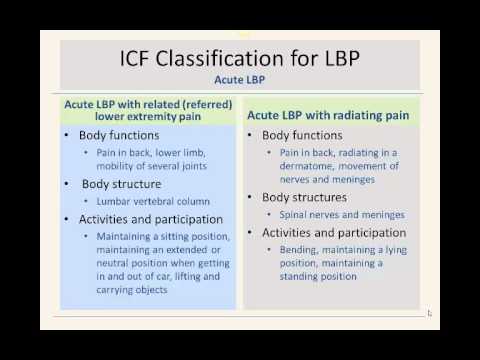
Low Back Pain Clinical Practice Guidelines: Part 1 Overview
admin123 0 Comments Back Pain CHRONIC PAIN
hello my name is Adam Yoder I’m a current gim fellow in training welcome to this introductory presentation on the clinical practice guidelines for low back pain this guideline is produced by the orthopaedic section of the apt a in conjunction with the World Health Organization this presentation is a very brief overview of the clinical practice guidelines for low back pain more in-depth information will be presented in part two I hope you find this information a value in your current clinical practice the apt a and orthopedic section began a process to develop clinical practice guidelines based on the latest evidence for common clinical syndromes the purpose of the clinical practice guidelines are to enhance clinical practice patterns by assimilating and appraising the latest clinical evidence for management of patients with low back pain the purpose is also to stimulate further research in areas where there is little evidence to help guide clinical practice please visit the orthopaedic section of the APTA for further information on the clinical practice guidelines this slide is taken directly out of the document and on this slide you’ll see there are several purposes to the guidelines that have been listed below obviously one is to enhance clinical practice the other is to give researchers better ideas of what to further research in areas that we don’t know very much about low back pain another reason is to provide information for payers and claim reviewers regarding physical therapy so as you can see there’s many different reasons on why that the guidelines have been produced and why the APTA is taken on this initiative so the orthopedic section looked and talked to specific experts in low back pain to help develop the clinical practice guidelines and the panel of experts were sort of given several initiatives on what to research and want to discuss the first thing was to look at look at and identify body function structure activity limitation and participation as described by the World Health Organization’s IFC guidelines then they wanted to categorize patience into movement impairment patterns to base interventions in these categories were all kind of determined through the IFC guidelines based on the body function structure activity limitation and participation deficits then after after looking at those and assessing the movement impairment patterns they looked at the end of the best interventions to fit those categories and then they determined how much evidence existed in treating those impairment patterns the lead author then assigned other authors or other experts to subcategories within low back pain such as classification examination and intervention to search the literature typically each author was designated an area where they were more of a specific expert such as the classification or specific interventions each author then independently searched the literature MEDLINE cinahl cochrane database to find the best available evidence the articles were then compiled by the authors and were scrutinized and then it was determined how relevant they were to their area that could eventually be included in the document these individual articles were then graded according to the criteria described by the Center for evidence-based medicine there is a website that you can go to for the Center for evidence-based medicine that talks about the different levels of evidence and studies that we do have level one evidence was from a high quality diagnostic study these are typically randomized controlled trials level two was evidence obtained from a lesser quality study they could be randomized controlled trials but or maybe a little bit weaker in their standard such as their randomization or blinding the third was case control studies or retrospective studies fourth would then be a case series and then five would be expert opinion that was how each individual article was graded by the panel of experts after individual articles were graded they were then pooled and then the overall strength of the evidence in a particular particular area was was graded so for example grades of recommendation and the clinical practice guidelines could be a strong evidence so if there were several level one and or level two studies they would then most likely grade the overall recommendation on strong evidence be moderate evidence was a single high quality randomized trial or several level two studies weak evidence see was a single-level – or could be level three and four studies and could be statements of consensus or expert opinion d conflicting evidence may have higher quality studies but some of these studies may disagree with with each other on their conclusions so then with conflicting evidence they would be given a D grade a theoretical foundational evidence this is going to be evidence from lower studies such as animal cadaver studies or based on models basic science an expert opinion F recommendation would be based on clinical experience or guidelines from development teams I just want to make a comment here about the intent of the clinical practice guidelines it should be noted that the lope back-pain clinical guidelines are guidelines they’re not intended to serve as the standard care of medical care and physical therapy adherence to guidelines will definitely not ensure a successful outcome with each and every patient in managing patients physical therapists should include patient values expectations and preferences in their management another key aspect is that clinic clinicians should also adhere to sound clinical reasoning skills and should not blindly follow the guidelines without clinical reasoning skills and considering the patient in front of them one large area of the clinical practice guidelines for low back pain was developing a classification system for patients the apt a looked at the World Health Organization’s framework for determining disability and function throughout the world to help create a classification scheme for patients with low back pain they really looked at two domains they looked at the body structure such as the structure of the back which would be the low back the hip the pelvis what was the structure involved and the function of the area what is the functional what are the functions that those areas that undertake and the other area was activity and participation how do patients classified in a certain area how does it limit certain activities and participation more information can be found about the classification scheme by visiting the World Health Organization’s website the first classification is acute low back pain with mobility deficits so this is typically a patient who presents with problems with mobility and the body functions under the body functions category could be pain in the back thigh and the mobility of joints the body structure is then the thoracic lumbar or pelvic joints and this may limit them with activities and participation such as bending so this is the first classification it may also look similar to the treatment based classification manipulation or mobilization category the second category is very similar to the first category low back pain with mobility deficits however this specific classification is different from the first and that it is considered sub acute meaning the duration of the symptoms have simply been going on longer than the acute low back pain again the body functions could be a pain in the back buttock and groin there will be modal mobility deficits possibly of several joints vertebral segments hip joints thoracic are all areas of mobility deficits and that this does involve thoracic lumbar pelvic joints as well as the muscles and ligaments and again the main activity and participation limitation is going to be bending again similar to the treatment based classification of manipulation mobilization the next category is acute low back pain with movement impairments this classification could also be looked at very similar to the stabilization category in the treatment based classification if you’re familiar with that body functions pain in the back or lower limb and control of complex voluntary movements so the structures typically involved are going to be the muscles of the trunk pelvis and hip region activities and participation limitations could be shifting bodies center of gravity maintaining a specific body position and maintaining good alignment of the trunk and pelvis the next classification is low back pain with movement coordination impairments however this is now sub acute and chronic low back pain body functions are similar to the previous classification pain in the back lower limbs control of voluntary movements same body structures typically are involved such as the muscles of the trunk ligaments and fashio of the trunk the hip joint and thigh activities and participation again shifting center of gravity and maintaining alignment maintaining sitting positions may also be limited bending and completing a daily routine are all going to be activities that may be limited in these patients the next two categories are acute low back pain with related or referred lower extremity pain and acute low back pain with radiating pain in acute low back pain with referred pain again the body functions will be pain in the back lower limb and mobility of several joints it typically involves the lumbar vertebral column patience may have a difficult time maintaining a sitting position maintaining an extended or neutral spine may have difficulty getting in and out of a car and lifting and carrying heavy objects this classification may be similar to a directional preference classification scheme the next one acute low back pain with radiating pain involves pain in the back radiating in a dermatome and involves movement of the nerves and meninges so a nerve root compression or nerve root problem is most likely associated with acute low back pain with radiating pain activities and participation may have difficulty with been bending maintaining a lying position or maintaining a standing position this classification may be similar to a directional preference category or possibly a traction category the next classification is sub acute and chronic low back pain with radiating pain again very similar pain in the back lower limb and in a dermatome apat ern typically involves the peripheral nerve roots as well as the spinal column and again bending maintaining positions such as lying standing or maintaining a slump sitting such as driving in a car may also be limited in this population acute and subacute low back pain with cognitive or affective tendencies is the next category typically these patients have sensitivity to noxious stimulus pain with limited range of motion and often have mental functions that are inappropriate for the amount of pain that they do have the body structures that involved are typically the cortical lobes and midbrain diencephalon and brain stem these patients typically have a difficulty completing daily routine and managing diet and fitness and living a healthy life chronic low back pain with related generalized pain is typically a patient who has developed chronic pain or has chronic pain syndromes such as fibromyalgia there’s often a link to the brain such as the cortical lobes midbrain and is often a progression from acute low back pain with affective tendencies these patients are very difficult to manage and they often have difficulty managing their daily routine work requirements diet and fitness and how to even have difficulty with relationships and social interactions due to their pain again this this category someone who has potential fear of odin’s beliefs and other maladaptive mental behaviors this slide is taken directly out of the low back pain guidelines and is just a brief overview of the different classifications they also include the ICD codes underneath the classification so again acute and subacute low back pain with mobility mobility deficits the icd-9 icd-10 segmental or somatic dysfunction acute subacute and chronic low back pain with movement coordination impairments often considered spinal instabilities with ICD codes acute low back pain with referred pain often considered flat back syndrome or lumbago acute and subacute chronic low back pain with radiating pain lumbar radiculopathy neuritis lumbago with sciatica so you can see the different categories there that have been outlined and the different ICD codes that go along with that please take a moment to orient yourself to this slide there’s a lot of information on this slide basically what we have here is the classification with the ICD associations the symptoms impairments and the primary intervention strategies that should be included that are recommended by the panel of experts so our first category acute low back pain with mobility deficits symptoms typically acute low back pain buttock rafi pain quick onset of pain sometimes unilateral pain and often links to an unguarded or awkward movement they usually have lumbar range of motion limitations as they do have mobility deficits they may have low back and extremity symptoms the primary interventions are manual therapy procedures it’s recommended thrusts manipulation and other non thrust mobilization techniques to diminish pain and improve pain therapeutic exercises should also be implemented to maintain spinal mobility and supplement manual therapy procedures patients should also receive education to stay active to continue an active lifestyle and not to succumb to bed rest the next category is sub acute low back pain with mobility deficits they have similar symptoms as the acute low back pain with mobility deficits however these impairments typically are reproduced with end range motions and they usually will have restricted thoracic range of motion lumbar range of motion or lumbo-pelvic or hip range of motion with segmental mobility restrictions again manual therapy procedures thrust and non thrust are recommended therapeutic exercises to supplement the manual therapy and the focus should be on preventing reoccurrence of low back pain this slide discusses acute low back pain with movement coordination impairments or spinal instabilities an acute exacerbation or reoccurrence of low back pain is commonly associated with spinal instabilities these are typically younger females who have lots of motion and are very flexible they typically present with with pain with initial to mid-range spinal movements and it may produce low back or extremity pain they often exhibit movement coordination impairments such as aberrant spinal motion the recommended treatment approach is neuromuscular reeducation to help promote the dynamic stability of the spine external devices could be used temporarily to help stabilize the spine self-care and home management training strategies should be utilized to help protect the patient and they should be educated on proper posture and maintaining good spinal position the next one is sub acute low back pain with movement coordination impairments these patients now have impairments with mid-range motions that worsen with end range movements often low back and related extremity pain can be produced there’s typically a hypermobility of a spinal segment usually in the lumbar spine there may also be stiff or mobility deficits in the thoracic spine or possibly the hip region typically these patients also have diminished trunk control and strength neuromuscular re-education again should be prescribed for these patients manual therapy procedures should be incorporated where there is a loss of mobility in certain areas whether it be in the thoracic lumbar hip and therapeutic exercises to improve endurance and muscle strength should be utilized again I just want to draw your attention to chronic low back pain with movement coordination impairments very similar presentation to acute low back pain and sub acute low back pain with movement coordination impairments however it’s just more chronic or more reoccurring and typically they have pain that is worse at end range and worsens with sustained and end range motions they present with high permeability of segmental testing typically the lumbar spine again may have mobility deficits somewhere else in the region such as the thorax thoracic spine or hips neuromuscular re-education is the treatment that is recommended and manual therapy procedures and interventions should be used in areas that are identified to be hypo mobile strengthening and re-education are the key and community work reintegration training is important if they are using their spine in a way that is somewhat physical the next category is acute low back pain with related or referred lower extremity pain also known as flat back syndrome or lumbago according to the ICD codes typically acute low back pain commonly in the buttock thigh leg impairments they can present with a pain in the low back or leg that can be centralized with specific movements they may present with the reduced lumbar lordosis and they may have limited extension mobility they may also present with a lateral list or a lateral shift of the trunk typically these interventions are going to be therapeutic exercises manual therapy or traction procedures to promote centralization these patients also need education in correct positions especially in sitting neuromuscular reeducation interventions may also be appropriate for these individuals acute low back pain with radiating pain is often presented with a very narrow band of land sating pain very specific to a dermatome the patient may also experience numbness and tingling and or weakness in the leg they typically have pain with initial to mid-range movements the procedures that are recommended our education in is in position such as sitting standing walking manual or mechanical traction is also recommended a manual therapy to take pressure off the nerve roots manual therapy to the soft tissues to help relax the patient are also recommended nerve mobility exercises in the pain-free non symptom range may also be recommended the sub acute low back pain with radiating pain similar progression however these patients may also present with mid-range and worsening with end range movements they may have lower limb tension tests that are positive such as the slump or the straight leg race they may still have extremity sensory or strength reflex deficits again manual therapy to mobilize the spine manual or mechanical traction to take pressure away from the nerves or nerve roots nerve mobility exercises in the mid-to and ranges to improve the mobility of the dura chronic low back pain with radiating pain typically these patients will have problems with sustained or end range movements that put stress on the lower limb nervous system they may also begin to or also continue to have signs of nerve root involvement manual therapy interventions and exercises are recommended in these patients to mobilize the nerves and the tissue around the nerve roots patient education again is recommended especially if patients are sustaining positions such as sitting or in positions of end range stress acute or subacute low back pain with cognitive or affective tendencies are usually described as disorders of the central nervous system symptoms are acute or subacute low back pain and they may have lower extremity pain as well these patients may have positive mental disorder screens that are positive such as the highs higher scores on the fear voidance beliefs or high scores on pain catastrophizing scale they may also have signs and symptoms of depression these patients really need patient education and counseling whether that be by the physical therapist or by professional psychologists chronic low back pain with related generalized pain these patients typically do not follow a clinical pattern of mechanical low back pain they may have disorders of a central nervous system where they have more widespread pain and again these patients may be positive for screens such as depression high scores on the fear voidance beliefs or high scores on the pain catastrophizing scale these patients again really need education and counseling whether that be for depression or counseling for fear avoidance beliefs or pain catastrophizing behaviors these patients may also benefit from low intensity prolonged aerobic exercise activities these patients will typically not respond well to higher intensity exercises they me they may need lower more graded exercises now that we’ve talked through the classification system that’s proposed by the expert panel and the Jo SPT guidelines for low back pain I want to go through a summary of recommendations on other areas that are important in the management of low back pain the first areas risk factors of low back pain the current literature and the panel did not find a specific definitive cause for the initial onset of low back pain what they found is that low back pain is often multi-factor ‘el and it can be specific to certain populations this is based on be moderate evidence the clinical course of low back pain is typically defined as acute subacute Riya current or chronic in nature and given the disability associative low back pain and the high medical cost of low back pain interventions should be directed towards preventing reoccurrences and chronicity this is based on theoretical foundational evidence we’ve already discussed fairly in-depth of the classification system that’s proposed by the panel in the Jo SPT guidelines there are other classification systems available such as the MD T or Mackenzie approach and the treatment based classification proposed by Fritz it is recommended by the panel that classifying patients into categories has benefits typically these patients are classified based on their signs and symptoms and then matched to the best treatment based on their signs and symptoms this is based on moderate evidence and this will be discussed more in depth in part 2 of this presentation differential diagnosis is a very crucial part of being a physical therapist it is important that physical therapists know the red yellow flags of patients that may come into their office we must know who and when to refer it’s with strong evidence that the panel recommends procedures to differentially diagnose patients based on their signs and symptoms it’s recommended that if patients symptoms are not resolving with treatment aimed at restoring the impairments that they be referred on outcome measures such as the Roland Moore’s disability questionnaire and the oswestry disability index have been studied very significantly and are highly recommended by the expert panels it’s with strong evidence that these disability questionnaires are recommended these tools are very helpful in determining a patient’s baseline status and monitoring their status over time through the course of treatment it is also beneficial for the clinician or therapists to monitor their ability to treat and improve patients over time not only should clinicians consider self-report measures such as the Oswestry or role and Morris disability questionnaire they should also look at work capacity evaluations or activity and performance measures to determine the level of activity a patient may be able to perform this is based on expert opinion and the experiences of the guideline team as was discussed earlier manual therapy interventions should be utilized in patients with low back pain this is based on strong evidence thrust and non thrust joint manipulative procedures should be considered especially in those patients that present with mobility deficits and have acute subacute and chronic low back pain drunk coordination strengthening endurance exercises are commonly prescribed for patients with low back pain it is with strong evidence that drunk coordination strengthening endurance exercises are recommended clinicians should definitely consider these interventions in patients with sub acute and chronic movement coordination impairments they should also consider these strategies in patients that are post lumbar microdiscectomy centralization and directional preference exercises and procedures are recommended based on strong evidence clinicians should consider using repeated movements sustained movements or exercises or proceed that will promote centralization and patience typically these procedures will be used in patients with acute low back pain with referral to the lower extremity they can also be utilized in patients with acute or subacute low back pain with mobility deficits flexion exercises have often been prescribed for patients with low back pain as well however we have weak evidence to support the use of flexion exercises in isolation however flexion exercises can be beneficial when packaged with manual therapy strengthening exercises in potentially nerve mobilization procedures in patients that are elderly or who present with chronic radiating pain or signs and symptoms consistent with spinal stenosis there is weak evidence to support lower quarter nerve mobilization procedures however clinicians should consider using lower quarter nerve mobilization procedures in patients with acute and chronic low back pain and radiating pain traction has typically been an intervention that causes some controversy among physical therapists and it’s with conflicting evidence that traction is recommended it is not recommended with patients with acute or subacute non radicular low back pain if mechanical traction is used it should typically be used when there are signs of nerve root compression or if there’s peripheral ization of symptoms or a positive cross straight leg raise patient education and counseling is recommended based on moderate evidence for patients with low back pain patient education and counseling should can that are affirming the patient that the human spine is very strong they should also consider using neuroscience education that explains the patient’s pain perception they should continue to affirm the patient of the favorable prognosis of low back pain they should continue to help support them and using active coping strategies and they should really reassure the patient that they should reactivities and focus on function not just pain it is not recommended to include in-depth patho anatomical explanations to patients as this may create an increased amount of threat or fear to them progressive endurance exercises and fitness activities are recommended based on strong evidence moderate to high intensity exercises such as aerobic and strength training should be utilized for patients that have chronic low back pain without generalized pain it’s recommended that those that have more of generalized pain would do better with lower intensity submaximal fitness and endurance activities more graded low level activities are recommended for patients with generalized low back pain again I just want to emphasize that these are just guidelines and the evidence and expert opinion can change over time I do encourage you to classify and use inner interventions based off classifying patients matching treatments to their presentation and I also want to encourage you to consider using patient values and your own personal clinical reasoning from previous experience as well as the evidence in your approach to treating patients with low back pain again thank you for listening to part one a more in-depth presentation on specific articles and evidence will be presented in part two I thank you very much for listening and we’ll see you in part two
Pain Management Awareness Program by Dr Karthic Babu Natarajan – Pain & Spine Specialist
admin123 0 Comments Back Pain CHRONIC PAIN
hello good morning this is the Picatta nitrogen coming on facebook lives this is more a patient related pain management awareness program done on the beautiful and wonderful vocation of India’s independence day now we are all proud Indians and I am expressing my heartfelt Independence Day wishes to all of you so happy Independence Day to all those who are watching from India now the idea of doing this program is to increase awareness about freedom from pain and the idea is to increase awareness about back pain so I’m a pain and spine physician so treating pain is my business so that’s the whole idea now the way I have sequenced this Facebook live chat is I’ve made the announcement a few days ago and I have got a series of questions which I have with me right now now I’m going to go on and answer these questions in the beginning and then once I’m done maybe I will take the questions which are appearing as comments as we go along so the sequence of events that came about this we wanted to increase awareness about back pain and how it is managed now I told you the concept is freedom from pain and we were actually planning to do a series of facebook live chats so the freedom from back pain is the first in a series of lectures or like a facebook live chats that we are planning to do so I would be happy if people join in and send in your comments and send in your reviews about how the program is going and how we can take it forward from that okay so first of all I would like to thank all of those who have joined them I can see a lot of likes and I can see a lot of shares coming on right now so my time stall of you now before we start off just a little bit about back pain itself and how I do it so we see a lot of patients in our clinics about back pain I’m a full time pain physician so in my practice about 60 to 70 percent of patients who walk into my OPD back pain now generally when we see somebody with back pain one of the things that we want to do is we want to identify the cause as a physician and once that is done we try to confirm what the cost is in terms of clinical examination in terms of good history in terms of radiological confirmation and then we go about treating them now when we actually treat these patients till now what we were doing is pretty much what we were doing is we were treating them with medication we were treating them with physiotherapy we were treating them with muscle relaxants and neuropathy can NSAIDs sort of drugs and then those patients wouldn’t respond adequately to this these patients went in for surgery now the idea of doing this is I’m a pain physician so I have a slightly newer modality of reading back pain and that is I sort of three patients with back pain through injections so one of these injections actually sit in so you’re going to see patients who come with my back pain I’m just putting it I’m sort of simplifying things a little bit we are going to see patients with mild back pain you’re gonna see patients with moderate back pain and patients with severe back pain I’m sort of simplifying this so probably the ones who have mild back pain I would probably treat only with medication physical therapy I give a lot of importance to physical therapy I have a full fledge to rehab team working in the clinic they do the stretches they do the strengthening and they do the posture correction that sort of thing and also the injections come in somewhere between the conservative management and the surgery itself so the injections we sort of treat patients through in terms of x-ray guided injections for back pain we do radiofrequency ablation we do local anesthetic injections we do PRP injections we inject stuff like Botox that sort of thing and also we do minimally invasive procedures like endoscopic diskectomy and then if nothing works we also have an auto petition in the clinic so if nothing works we go for spine surgery so this is the various gamut of treatment that we offer for somebody with back pain so I can see a few questions coming in right now so what I’m going to do is I have a set of questions which have already come in so I’m going to talk a little bit about what has already come in so the first question that came in was or the way I have categorized it was what are the common reasons for back pain and how do you prevent back pain okay so we’ll start with that what are the common reasons for back pain now we see a lot of patients who have a very sedentary lifestyle right now a lot of these patients office goers who have a very sedentary lifestyle and they do jobs like IT or they work in the bank and stuff like that where they’re very they have a very sedentary lifestyle and they sort of don’t have too much physical activity so this is the first group of patients who sit for 8 hours 9 hours in their jobs and they have back pain now the common question that people ask is how do you prevent somebody who has a sedentary lifestyle from having back pain we find that I work in Chennai so I work in the southern part of Chennai which is very close to the IT highways so we have a lot of software guys who work or who have a sitting job and will keep working for long periods of time who have back pain now how do you prevent that so one of the things that we suggest is get some physical activity going so the physical activity that I suggest in the Indian scenario for somebody is I suggest things like walking I suggest things like brisk walking I usually suggest them to get a good pair of shoes and start walking that is something that we commonly do the other things that will sort of suit you in an Indian scenario with somebody with that fame the physical activity in the second one that is suggest is yoga so yoga is something that we have had traditionally and whatever things we’ve had traditionally has been pretty much good so I usually suggest patients to undergo yoga ideally if you’re doing yoga you want somebody who has a reasonable amount of medical knowledge to train you just in case you are not trained you are not being trained in yoga’s by somebody who has some medical knowledge the basic dictum to follow is don’t do anything that’s too painful you don’t want to be stretching your back awkwardly when you’re having a bad back or you don’t want to be standing on your head if you’re having a bad neck pain so general dictum is don’t do anything that’s too too painful so that’s the general victim if you are doing yoga other things other than the walking and the yoga that I suggest generally ask the physical activities women so assuming is fantastic the good thing about swimming is either because of the buoyancy the way to sort of getting transmitted so it doesn’t put too much pressure on the lumbar spine itself or the knee joint so that’s sort of good so swimming isn’t fantastic with somebody with back pain and also when you actually swim a lot of people come and say oh no swimming how do I do this so normally what I suggest is even if you don’t know swimming if you can go and get some walking in the swimming pool that’s fantastic for you so swimming walking in this water aqua therapy that is fantastic the other gentle activity that I suggest is gentle games like shuttlecock battement and that sort of thing so usually for things that I suggest there is also another one called Tai Chi so I see the slow rhythmic Chinese sort of like a dance moment that’s something that we suggest as a physical activity for back pain so we were talking about prevention of back pains so the activities that I’ve suggested are walking yoga swimming and gentle games like shuttlecock or badminton once the physical activity you’ve taken care of I generally we advise physical activity for at least four to five times a week so that’s about half not in the morning that’s good once the physical activity aspect of it is taken care of whenever you’re working in your office one of the things that you want to do when you’re working is make sure you have a good chair in the office so by good chair I mean that you need to have a reasonably good back support and you our chair is at the correct height so when your chair is in the correct height you don’t have to be bending down or bending up that sort of thing and always make sure you have a reasonably good back support and your lower back is touching the chair or whatever support you have fully so you don’t want to be sitting in the tip of your chair and then leaning back which is something that we call a slouching so slouching is something that sort of aggravates and puts more pressure on the surrounding ligaments so that’s something that you want to be avoiding so get a good chat make sure the height of the chair is good and always make sure your lower back is touching the lumbar support the second thing that you want to remember about your chair is we angry guys actually call this the ergonomic chair the second thing you want to remember about the chair is you want something to keep your elbows on so this is called a hands support if you are working for long hours a hand support is a good idea that sort of gives you a little bit more control over how you’re working third thing is if you are using the most a lot of time make sure your wrist standing or the wrist is resting on your table before you hold the most you don’t want to be keeping your wrist in there and trying to move your mouse that’s going to put a lot of pressure on your wrist so the thing that I told you about her a good share with a good back support good height of chair with something to rest your hand and something to rest your wrist the other things that you want to remember are if you’re going to be using the computer a lot make sure you want to have the monitor at the correct level you don’t want to be having a monitor too much down or too much up so you want the monitor to be at the correct high level and also if you’re having if you’re sort of slightly short stage shirt make sure you have a support for your feet so that each University or feed comfortably other than that when you’re working for long hours the things that you want to remember are especially for people who work for eight nine hours stuff like that so the things that you want to remember are as much as possible try to take a periodic break when I say periodic break I’m essentially saying a break every 30 minutes or 40 minutes so try to go out and stretch yourself try to go to the loo try to do some try to go get some water that sort of thing try to not sit continuously for more than half an hour so that’s that’s a good idea so you sort of go take a walk and then come back and restart your work other than that general things that you want to avoid for back pain are to bring sufficient amount of water so sufficient amount of water by that I mean that you want to drink at least two point two to 2.5 liters of water that’s about eight glasses of water a day smoking is not a good idea if you have a back pain smoking smoking is supposed to reduce the blood circulation to the spine itself so you want reduce smoking and make sure you want ideally stop smoking the other things that you want to remember as a lifestyle change to prevent back pain are that you don’t want to be lifting too much heavy weights so what happens is when you actually stand there right bend your back codon and lift heavy weights it puts enormous amount of pressure on your back so you want to be careful when you’re treating I mean when you’re bending forward and lifting something heavy so ideally somebody with that and one of the things that I said you to my patients is if you really have a back pain and you have to loop something try not to bend your back and go don’t try as much as possible to bend your knees instead of the back so you keep your back straight go down by bending the knees whatever you want to lift get it as close to you as possible and then straighten it that sort of makes it’ll reduce the pressure on the lumbar spine itself and if it puts a little bit more pressure on the knee so that’s okay for patients with back pain and the way you travel is something that’s a factor in countries like India so generally what we suggest is the things like cars buses and trains and planes are fine now we get into trouble when we travel by something which is sort of putting a lot of pressure in terms of vibrations or jerking so if you are using the back roads of India which is sort of unavoidable one of the things that you want to keep in mind is you want to be a little bit careful when you’re using your two wheelers and you want to be a little bit careful when you’re using your three wheelers or if your vehicle does not have great shock absorbers that’s something you want to keep in mind you don’t want to have a bad back and go in a bad road and a bumpy right and that will sort of put more pressure on the discs that come with thee in that that abarim the lumbar spine and that that can aggravate your back pain so these are the general things that we advise in terms of lifestyle so I talked to you about how you sit in the office have you used an ergonomic chair how you take periodic breaks when you’re working and also how you commute and how you take care of your back bending forward and bending away the last thing in terms of prevention of back pain that I want to mention to you is the sort of bed mattress that you guys have at home so when using a bed mattress one of the things that you want to keep in mind is you want your bed mattress to be reasonably firm or hard not too soft you don’t want to be essentially sinking into the bed mattress itself so if you are using a mattress make sure it’s reasonably firm in my practice I recommend somebody with the medium-sized below so a reasonably firm mattress with a little medium-sized pillow is a good idea so to some of the things that I told you in terms of prevention of back pain are good physical activity I talked to you about exercises yoga I talk to you about [Music] gentle sports brisk walking swimming ergonomic chair to prevent your how you sit in the office and long periodic breaks and also have you commute so these are the things that I talked to you about in terms of through preventing back pain itself now when you talk about the common reasons for back pain as a doctor who treats back pain we see patients who come with something that we call as a mechanical back pain so mechanical back pain is something where there’s something mild wrong with the surrounding muscles and ligaments so we need to work on what’s wrong with the muscles and ligaments and sort of try to treat them with muscle relaxants pain killers posture correction physical therapy that sort of thing we also find things that are structurally long in terms of things that are wrong something is wrong with the bone itself we get things like sometimes we get what you bone fractures we get facet arthritis we get sacroiliac joint arthritis sometimes there is a problem with the disc which is basically a cushion between the intervertebral bones itself you have multiple bones in the spine in between each of these bones you have a cushion that’s called a spine to vertebral disc sometimes you may have problems with the intervertebral discs so you want to be a little bit careful if you are treating somebody with a disc herniation now the other thing that you want to keep in mind are we actually try to assess these patients first with a good as soon as the patient enters the doctor’s clinic we get a good clinical history we do we do a detailed orthopedic and neurological examination and then we actually go ahead and do the investigation the investigation could be in the form of x-ray it could be in the form of a CT or it could be in the form of an MRI once we have a reasonably accurate diagnosis we sort of go ahead and treat patients so that’s T common reasons and ways to prevent somebody with back pain now the second question that I have caught with me is what is the dis prolapse now this prolapse is one of the common reasons for back pain now what happens is I just talked to you about intervertebral discs now intervertebral this basically the shock absorber between the bones in the lumbar spine now what happens is when you find somebody with a lumbar spine and you have the intervertebral disc which is it’s basically a structure that’s sort of here so you have multiple bones and this so when you have a herniation of one of these structures here this sort of squeezes out goes back and it touches the spinal cord itself and the spinal nerve that goes down so you have something which is called as a pinched nerve so when you have a pinched nerve the nerve which are that in the lower back so this is your lower back here when you have a pinched nerve in the lower back what are you going to get is wherever this nerve is going you’re going to get symptoms so when I talk about symptoms for a pinched nerve the symptoms are what we call a shy Attica so somebody with the lower back with pain radiating down is called sciatica so what happens is you’re gonna have symptoms like a tingling numbness radiating down the legs so when you have symptoms like that you suspect a pinched nerve the most common cause for a pinched nerve in the back or the most common cause for sciatica is somebody with a back pain with sore disc herniation which is pinching the no so this is the reason why we get patients so usually these patients present with lower back pain this pain is radiating to the buttocks back of the thigh back of the knee and sometimes after the toes and also you may find that these patients other than the pain also have a little bit of tingling a little numbness and in severe cases this patients may have motor weakness motor weakness is something where they are not able to move the toes when you’re able to ask them to move the ankle they’re not able to do that and sometimes if the disc herniation itself is very severe and the entire cord is compressed you may get something where the patients are not able to control their urination and defecation so essentially if I were to simplify things somebody with the mild disc herniation presents with a bit of back pain which is going down to the thighs and going down to the cough muscle sometimes these patients also have a bit of tingling and numbness the ones with a little bit moderate disc herniation along with the pain radiating down the legs also have some motor weakness ones with severe compression are the ones that have significant what are weakness they’re not able to move the ankle you have something which we guys call it a foot drop so you’re not able to move your foot up and down and you may also have difficulty in controlling your urine and stuff like that so this is how we grossly sort of differentiate what is the this collapse itself so you want to consult your doctor it could be a pain physician it could be author physician it could be it could be an author position it could be a neuro neurologist or a neurosurgeon and then you can take it from there in terms of treatment so usually we’ll get an x-ray and an MRI then we may do a basic group of blood tests and then we will treat you according to water test the second question in terms of this prolapse that of common is the how do you treat disc herniation so I told you I’ve sort of broadly classified disc herniation and two mild moderate and severe in terms of symptoms I told you the mild ones pretty much have pain radiating down the legs the moderate ones have along with the pain they may also have a bit of numbness in the legs the severe ones have motor weakness in terms of not able to move their and having difficulty in controlling the urines and motion and that sort of stuff so generally treatment wise if you see for a disco nation the things that you want to do are we do conservative management majority of the time when they come initially itself to treat the patients conservatively so somebody with back pain the first thing that I do is I teach them some lifestyle changes I teach them how to take care of them back one second is I treat them in terms of correcting the posture so the physio team works on them to correct the posture we also treat them with mild pain killers muscle relaxant that sort of thing once that is done a group of patients with mild disease they sort of become alright with that so that’s pretty much what we offer the ones that don’t respond adequately to fish with back with physiotherapy physical therapy and rehabilitation and the ones that in spite of medication and physical therapy have back pain are the ones in which we go hello good morning this is the piccata nitrogen coming on Facebook lives this is more a patient related pain management awareness program done on the beautiful and wonderful vocation of India’s independence day now we are all proud Indians and I am expressing my heartfelt Independence Day wishes to all of you so happy Independence Day to all those who are watching from India now the idea of doing this program is to increase awareness about freedom from pain and the idea is to increase awareness about back pain so I’m a pain and spine physician so treating pain is my business so that’s the whole idea now the way I have sequenced this Facebook live chat is me the announcement a few days ago and I have got a series of questions which I have with me right now now I’m going to go on and answer these questions in the beginning and then once I’m done maybe I will take the questions which are appearing as comments as we go along so the sequence of events that came about this we wanted to increase awareness about back pain and how it is managed now I told you the concept is freedom from pain and we were actually planning to do a series of facebook live chats so the freedom from back pain is the first in a series of lectures now or like Facebook live chats that we are planning to do so I would be happy if people join in and send in your comments and send in your reviews about how the program is going and how we can take it forward from that okay so first of all I would like to thank all of those who have joined them I can see a lot of likes and I can see a lot of shares coming and right now so my times to all of you now before we start off just a little bit about back pain itself and how I do it so we see a lot of patients in our clinics about back pain I’m a full time pain physician so in my practice about 60 to 70 percent of patients who walk into my OPD back pain now generally when we see somebody with back pain one of the things that we want to do is we want to identify the cause as a physician and once that is done we try to confirm what the causes in terms of clinical examination in terms of good history in terms of radiological confirmation and then we go about treating them now when we actually treat these patients till now what we were doing is pretty much what we were doing is we were reading the with medication we were treating them with physiotherapy we were treating them with muscle relaxants and neuropathic and NSAIDs sort of drugs and then those patients wouldn’t respond adequately to this these patients went in for surgery now the idea of doing this is I’m a pain physician so I have a slightly newer modality of reading back pain and that is I sort of three patients with back pain through injections so one of these injections actually sit in so you’re going to see patients who come with mild back pain I’m just putting it I’m sort of simplifying things a little bit we are going to see patients with mild back pain you’re going to see patients with moderate back pain and patients with severe back pain I’m sort of simplifying this so probably the ones who have my back pain I would probably treat only with medication physical therapy I give a lot of importance to physical therapy I have a full fledge to rehab team working in the clinic they do the stretches they do the strengthening and they do the posture correction that sort of thing and also the injections come in somewhere between the conservative management and the surgery itself so the injections we sort of treat patients through in terms of x-ray guided injections for back pain we do radiofrequency ablation we do local anesthetic injections we do PRP injections we inject stuff like Botox that sort of thing and also we do minimally invasive procedures like endoscopic diskectomy and then if nothing works we also have an ortho petition in the clinic so if nothing works we go for spine surgery so this is the various gamma cuff treatment that we offer for somebody with back pain so I can see a few questions coming in right now so what I’m going to do is I have a set of questions which have already come in so I’m going to talk a little bit about what has already come in so the first question that came in was or the way I have categorized it was what are the common since for back pain and how do you prevent back pain okay so we’ll start with that what are the common reasons for back pain now we see a lot of patients who have a very sedentary lifestyle right now a lot of these patients are office goers who have a very sedentary lifestyle and they do jobs like IT or they work in the bank and stuff like that where they’re very they have a very sedentary lifestyle and they sort of don’t have too much physical activity so this is the first group of patients who sit for 8 hours 9 hours in their jobs and they have back pain now the common question that people ask is how do you prevent somebody who has a sedentary lifestyle from having back pain we find that I I work in Chennai so I work in southern part of Chennai which is very close to the IT highway so we have a lot of software guys who work who have a sitting job and we’ll keep working for long periods of time and who have back pain now how do you prevent that so one of the things that we suggest is get some physical activity going so the physical activity that I suggest in the Indian scenario for somebody is I suggest things like walking I suggest things like brisk walking I usually suggest them to get a good pair of shoes and start walking that is something that we commonly do the other things that will sort of suit you in an indian scenario with somebody with back pain the physical activity the second ones that is suggest is yoga so yoga is something that we have had traditionally and whatever things we have had traditionally has been pretty much good so I usually suggest patients to undergo yoga ideally if you’re doing yoga you want somebody who has a reasonable amount of medical knowledge to train you just in case you are not trained you are not being trained in yoga by somebody who has some medical knowledge the basic dictum to follow is don’t do anything that’s too painful you don’t want to be stretching your back awkwardly when you’re having a bad back what you don’t want to be ending on your head if you’re having a bad neck pain so general dictum is don’t do anything that’s too too painful so that’s the general victim if you are doing yoga other things other than the walking and the yoga that I suggest generally ask the physical activities with me so swimming is fantastic the good thing about swimming is because of the buoyancy the weight is sort of getting transmitted so it doesn’t put too much pressure on the lumbar spine itself or the knee joint so that’s sort of good so swimming isn’t fantastic with somebody with back pain and also when you actually swim a lot of people come and say oh no swimming how do I do this so normally what I suggest is even if you don’t know swimming if you can go and get some walking in the swimming pool that’s fantastic for you so swimming walking in this water aqua therapy that is fantastic the other gentle activity that I suggest is gentle games like shuttlecock battement and that sort of thing so usually four things that I suggest there is also another one called Tai Chi so Tai Chi is a slow rhythmic Chinese sort of like a dance moment that’s something that we suggest as a physical activity for back then so we were talking about prevention of back pains so the activities that I’ve suggested are walking yoga swimming and gentle games like shuttlecock or badminton once the physical activity you’ve taken care of I generally advise physical activity for at least four to five times a week so that’s about half an hour in the morning that’s good once the physical activity aspect of it is taken care of whenever you’re working in your office one of the things that you want to do when you’re working is make sure you have a good share of the office so buy good share I mean that you need to have a reasonably good back support and your chair is at the correct height so when your chair is in the correct height you don’t have to be bending down or bending up that sort of thing and always make sure you have a reasonably good back support and your lower back is touching the chair or our support you have fully so you don’t want to be sitting in the tip of your chair and then leaning back which is something that we call a slouching so slouching you something that sort of aggravates and puts more pressure on the surrounding ligaments so that’s something that you want to be avoiding so get a good chat make sure the height of the chair is good and always make sure your lower back is touching the lumbar support the second thing that you want to remember about your chair is we angry guys actually call this the ergonomic chair the second thing you want to remember about the chair is you want something to keep your elbows on so this is called a hand support if you are working for long hours a hand support is a good idea that sort of gives you a little bit more control over how you are working third thing is if you are using the most a lot of time make sure your wrist standing or the wrist is resting on your table before you hold the most you don’t want to be keeping your wrist in there and trying to move your mouse that’s going to put a lot of pressure on your wrist so the thing that I told you about her a good share with a good back support good height of chair with something to rest your hand and something to rest your wrist the other things that you want to remember are if you are gonna be using the computer a lot make sure you want to have the monitor at the correct level you don’t want to be having a monitor too much down or too much up so you want the monitor to be at the correct high level and also if you’re having if you sort of slightly short stage shirt make sure you have a support for your feet so that you can rest your feet comfortably other than that when you’re working for long hours the things that you want to remember are especially for people who work for eight nine hours stuff like that so things that you want to remember are as much as possible try to take a periodic break when I say periodic break I’m essentially saying a break every 30 minutes or 40 minutes so try to go out and stretch yourself try to go to the loo try to do some try to go get some water that sort of thing try to not sit continuously for more than half an hour so that’s that’s a good idea so you sort of go take a walk and then come back and restart your work other than that general things that you want to avoid for back pain are to bring sufficient amount of water so sufficient amount of water by that I mean that you want to drink at least 2 point 2 to 2.5 liters of water that’s about 8 glasses of water a day smoking is not a good idea if you have a back pain smoking smoking is supposed to reduce the blood circulation to the spine itself so you want to reduce smoking issue you want ideally stop smoking the other things that you want to remember as a lifestyle change to prevent back pain are that you don’t want to be lifting too much heavy weights so what happens is when you actually stand there right bend your back go down and lift heavy weights it puts enormous amount of pressure on your back so you want to be careful when you’re treating I mean when you’re bending forward and lifting something heavy so ideally somebody with that and one of the things that I suggest to my patients is if you really have a back pain and you have to loop something try not to bend your back and go don’t try as much as possible to bend your knees instead of the back so you keep your back straight go down by bending the knees whatever you want to lift get it as close to you as possible and then straighten it that sort of makes it will reduce the pressure on the lumbar spine itself and if it puts a little bit more pressure on the knee so that’s ok for patients with back pain and the way you travel is something that’s a factor in countries like India so generally what we suggest is the things like cars buses and trains and planes are fine now we get into trouble when we travel by something which is sort of putting a lot of pressure in terms of vibrations or jerking so if you are using the bad roads of India which is sort of unavoidable one of the things that you want to keep in mind is you want to be a little bit careful when you’re using your 2 wheeler then you want to be a little bit careful when you’re using your three wheelers or Rachel does not have a great shock absorbers that’s something you want to keep in mind you don’t want to have a bad back and go in a bad road and a bumpy ride and that will sort of put more pressure on the discs that come with thee in that that abarim their lumbar spine and that that can aggravate your back pain so these are the general things that we advise in terms of lifestyle so I talked to you about how you sit in the office have you used in ergonomic chair how you take periodic breaks when you’re working and also how you commute and how you take care of your back bending forward and bending away the last thing in terms of prevention of back pain that I want to mention to you is the sort of bed mattress that you guys have at home so when using a bed mattress one of the things that you want to keep in mind is you want your bed mattress to be reasonably firm or hard not too soft you don’t want to be essentially sinking into the bed mattress itself so if you are using a mattress make sure it’s reasonably firm generally my practice I recommend somebody with a medium size pillow so a reasonably firm mattress with a with a medium size pillow is a good idea so to some of the things that I told you in terms of prevention of back pain are good physical activity I talked to you about exercises yoga I talk to you about gentle sports brisk walking swimming ergonomic chair to prevent your how you sit in the office and long periodic breaks and also have you commute so these are the things that I talk to you about in terms of preventing back pain itself now when you talk about the common reasons for back pain as a doctor who treats back pain we see patients who come with something that we call as the mechanical back pain so mechanical back pain is something where there’s something mild wrong with the surrounding muscles and ligaments so we need to work on what’s wrong with the muscles and ligaments and sort of try to treat them with muscle relaxants pain killers posture correction physical therapy that sort of thing we also find things that are structurally long in terms of things that are wrong something is wrong with the bone itself we get things like sometimes we get vertebral bone fractures we get facet arthritis we get sacroiliac joint arthritis sometimes there is a problem with the disc which is basically a cushion between the intervertebral bones itself you have multiple bones in the spine in between each of these bones you have a cushion that’s called a spine two vertebral discs sometimes you may have problems with the intervertebral discs so you want to be a little bit careful if you are treating somebody with a disc herniation now the other thing that you want to keep in mind are we actually try to assess these patients first with a good as soon as the patient enters the doctors clinic we get a good clinical history we do a we do a detailed orthopedic and neurological examination and then we actually go ahead and do the investigation the investigation could be in the form of x-ray it could be in the form of a CT or it could be in the form of an MRI once we have a reasonably accurate diagnosis we sort of go ahead and treat patients so that’s the common reasons and ways to prevent somebody with back pain now the second question that I have caught with me is what is the distal apse now this prolapse is one of the common reasons for back pain now what happens is I just talked to you about intervertebral discs now intervertebral discs basically the shock absorber between the bones in the lumbar spine now what happens is when you find somebody with a lumbar spine and you have the intervertebral disc which is it’s basically a structure that’s sort of here so you have multiple bones and this so when you have a herniation of one of these structures here this sort of squeezes out goes back and it touches the spinal cord itself and the spinal nerve that goes down so you have something which is called as a pinched nerve so when you have a pinched nerve the nerve which are that in the lower back so this is your lower back here when you have a pinched nerve in the lower back what are you gonna get tears wherever this nerve is going you’re gonna get symptoms so when I talk about symptoms for a pinched nerve the symptoms are what we call a shy Attica so somebody with the lower back with pain radiating down is called sciatica so what happens is you’re gonna have symptoms like a tingling numbness radiating down the legs so when you have symptoms like that you suspect a pinched nerve the most common cause for a pinched nerve in the back or the most common cause for sciatica is somebody with a back pain with sore disc herniation which is pinching the no so this is the reason why we get patients so usually these patients present with lower back pain this pain is radiating to the buttock back of the thigh back up the knee and sometimes after the toes and also you may find that these patients other than the pain also have a little bit of tingling a little bit of numbness and in severe cases this patients may have motor weakness motor weakness is something where we’re not able to move the toes when you’re able to ask them to move the ankle they’re not able to do that and sometimes if the disc herniation itself is very severe and the entire cord is compressed you may get something where the patients are not able to control the urination and defecation so essentially if I were to simplify things somebody with a mild disc herniation presents with a bit of back pain which is going down to the thighs and going down to the cough muscle sometimes these patients also have a bit of tingling and numbness the ones with a little bit moderate disc herniation along with the pain radiating down the legs also have some motor weakness the ones with severe compression are the ones that have significant motor weakness they’re not able to move that you have something which we guys call a food drop so you’re not able to move your foot up and down and you may also have difficulty in controlling your urine and stuff like that so this is how we grossly sort of differentiate what is the disc prolapse itself so you want to consult your doctor it could be a pain physician it could be a physician it could be it could be an art of addition it could be an ER or neurologist order neurosurgeon and then you can take it from there in terms of treatment so usually we’ll get an x-ray and an MRI then we may do a basic group of blood tests and then we will treat you according to water test the second question in terms of this prolapse that have come in is the how do you treat disc herniation so I told you have sort of broadly classified disc herniation into mild moderate and severe in terms of symptoms I told you the mild ones pretty much have they ain’t radiating down the legs the moderate ones have along with the pain they may also have a bit of numbness in the legs the severe ones have motor weakness in terms of not able to move their ankle and having difficulty in controlling their urine sand motion and that sort of stuff so generally treatment wise if you see for a disc herniation the things that you want to do are we do conservative management majority of the time when they come initially itself to treat the patients conservatively so somebody with back pain the first thing that I do is I teach them some lifestyle changes I teach them how to take care of them back.one second is I treat them in terms of correcting the posture so the physio team works on them to correct the posture we also treat them with my pain killers muscle relaxant that sort of thing once that is done a group of patients with mild disease they sort of become alright with that so that’s pretty much what we offer the ones that don’t respond adequately to fish with back with physiotherapy physical therapy and rehabilitation and the ones that in spite of medication and physical therapy have back pain are the ones in which we go
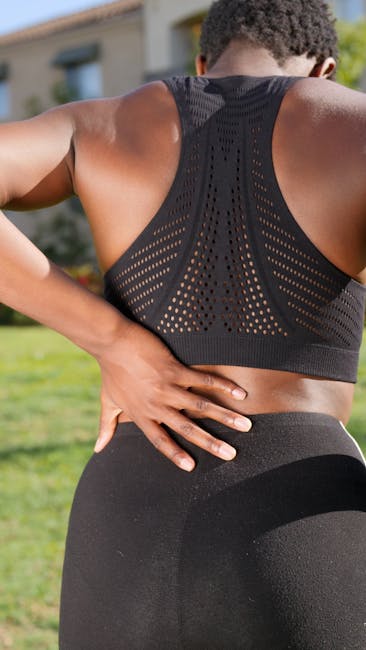
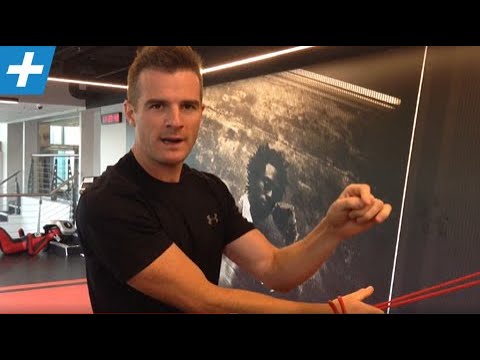
Reduce neck and shoulder pain in a one arm row / pull | Feat. Tim Keeley | No.23 | Physio REHAB
admin123 0 Comments Back Pain CHRONIC PAIN
okay today and we are looking at trying to get you working on the correct row post for your shoulder blade or your scapula so a lot of parties are having troubles when they row or when they do an forearm draw they’re doing the wrong things with their slipshod auto-mechanics and that can be due to pain to be witness to the four practices bad muscle govern today we’re going to try and support you how to use exerts to try to improve their control what their power needs to be like so a lot of time beings have sorenes down now the old-fashioned cervix ache from from computers or their training too hard and we accompany a lot of people with pain into the rhomboids and into that levator SCAP meet your sketch and what it tends to do is it tends to muck up their shoulder move and they tend to pull incorrectly and they tend to push incorrectly now this episode is about the pulling movement clearly we’re doing we get beings doing a lot of serratus movement and press fluctuation but we’re talking about the pull advance so with plucking what we want to focus on this with the sequence is Magnus sure you’re doing getting your shoulder blade plucking back correctly been using it rhomboids you’re using lats but uttering sure you access the lower bunkers to keep the shoulders stable most of time people attract and they pluck and they hoist and they use their upper trap to try and compensate because they’re massive baits aren’t working or “theyre using” this cire their levator SCAP to pull upwards and they can plead to a lot of difficulties when you rogue with a lot of neck pain and a lot of shoulder pain especially in the figurehead of the shoulder so first things firstly we’re going to try and I’ll testify you what the chastise action is for the shoulder route when you attract and then we’ll show you some practices so if you imagine what you’re trying to do when you draw when you move back with your shoulder bone has to come back first okay so shoulder bay comes back and as I pull back I’m exploiting the long committees but I’m trying to getting my fright catch activated so my shoulder baits sitting down I gathered it right back and then I’m going to pull through with my appendage preparing sure though when you pull through what you’ve all had to do is then rotate because I’m letting got to go so I’ve got to pull back hold it back squeeze out there pull round and then when I return it’s just a reverse flow so return the appendage to a dupe most movement and then get the shot of protech for okay so if we can start off on usage and now he only grab a pole could be a door jamb can you think what I require you working on is starting and then stay moving out you can go high-pitched and which axis in the bottom I’ll check that same crusade so you pull back it’s a style of shift so this is scapular rows consuming a saloon and you notice this is a closed chain position so it accesses a lot more stabilizers then then doing an open chain so that the closed chain position so I’m doing a scapular sequence so I’m just pulling my shoulder craft back and there’s my shot of a drags back I’m putting my torso forward right made to ensure that I don’t go on elevate and access my upper bunker to do a bit operate I’ve gotten try prevent my my distance between my ear and my shoulder quite little okay so drawing back pinching back and then not just dropping I’ve got a gradually release that a shorter way forward so that’s just scapular right okay with the bar really good want to start and then you can start doing with a band so this is more of an open bond exert so I’m now working on trying to do the same movement but restraining my person still so if this movement now I’m going from there and it’s just the shoulder bag that’s a very vulnerable exercise pretty easy what you’ve got to try it’s teaching you though to do scapular push precisely when you travel okay most the time you’re used to pulling so when you pull back you don’t want to start beating your shoulder so try and forestalled that so you by the right bank that I tell about it and then release forward again okay so scapula back and then forward again now to join combine that together you want to do a one-arm right and we can only use a exhibition bet if you’re a big week you’ve got a bit of pain I simply show go down to one but I’m expend 2 day so when you pull through now so we’re going to use the idea of make kept in a row so it’s row back then feeds your appendage for now as I come through I’m still pulling back I’m not countenance it go okay so I still want to get that last few kind of 1020 the Greens have didn’t have the traction back and offsetting sure I’ve got a decent distance between now and my shoulder so I’m not elevating I’m exerting my lower check and Matt’s gonna out your back here so stop that core on now when I’m back here I’ve got to try and stop my shoulder room back as I return the arms and don’t pop the shoulder move forward now keep your shot of a back as I return the forearm and then there’s a shot of a project quarter so that’s the movement that you guys need to be doing whenever you do any gathering with rowing pitch-black pull down stats I think it’s manufacturing sure you bounce the road pull through return return and I like to do this something finger on the back so thumb on the back of that shoulder bait so I can feel when my shoulder like this my finger pull through now obstruct my shuttle bay on my thumb and don’t mean it pull away my paw it’s a really nice little tube you can get that sort of shorter boat on your finger so as it comes back strokes your finger push your arm through and then keep it there until you need to release and let it go so this is one R one and row and then we can go okay what about pull down so if we go to something higher appended imagine like you’re doing a one-armed pull down like on a cable machine or we’re doing lat pull-downs this is going to help you perfect that move through your shoulder so when you do pull down when the load gets any when it starts get heavy you don’t go and do this because we find it when people do lat pull-downs the heavier the consignment when they pull down they start you read those shoulder blades rising up so we’ve got to get you going draw those shoulders down and then pulling through and to be maintained down and then as you return you’ve got to keep them down for the first part of it and then construct the rest far too many people make them release very immediate okay so this is where you have to go back higher and again one arm at a time because you can access one forearm at a time that’s way better to learn so if we came from here you down it now if you want to go lower down into one me shoulder back down pull right through better here’s the quirk impede that shot away back exploiting those mower racetracks down the back here and then release forward okay recur pull down pull through hold it down there and secrete sport and this is great for determining what with all those problems but beings are going sorenes anteriorly in the shoulder when they pull through that missile rollings for intensive want to roll out the seam when they pull through and they’re getting ache in the front so sick that a little more properly and likewise facilitates with parties going anguish in the back here where they’re overusing rhomboids overusing upper traps overusing levator SCAP and not accessing those lower trad muscles so start working on that likewise check out our lower trap exercisings that we have on on the videos and our serratus interior for the pressing work

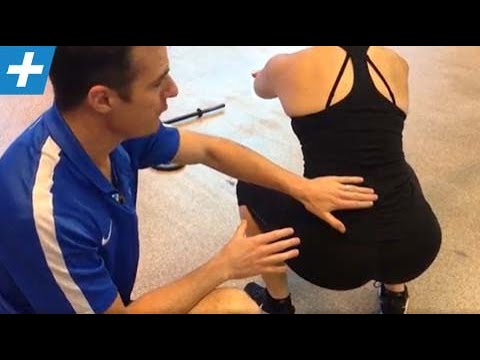
How to Squat Safely and Correctly with a Back Injury | Feat. Tim Keeley | No.71 | Physio REHAB
admin123 0 Comments Back Pain CHRONIC PAIN
all right we’re here today with Nicky and we’re demonstrate you how to do a squat properly and safely when you’ve got a dispersion and how to prevent any disc injury so with Nikki she’s got a current put and when she squats we’ve got to make sure she doesn’t get below what we call a break point so Nick if you precisely show us like a squat for me and we’ll just go side on what we want to make sure if she doesn’t do that but went connection form thing and so a lot of people this sort of degree will be 90 units so she goes need lower than that can you see that what happened there so if you come and I can have a look at this she goes from at this is she’s also a little very widened at this extent as well which we’re going to fix as well but when she descent lower did you see how that opens up there now what she’s doing she’s not even actually at 90 degrees hitherto down now they’re now at that point she’s actually rounded in now which is bad for her disc prominence so come on back up again because then she goes into extension which kind of gleams the as there and she comes up again so for this one for her safety-wise and for anyone who’s got a disc bulge and wants to prevent any back ache as you can go below the target where you’re going to lose neutral prickle so at that point there she can’t make that low-toned now for some people they’ll be able to go lower than that they’ll be able to go right to 90 severities because they’ve got accumulations of range in the trendy they’ve got a really good core stability here they don’t lose any neutral backbone but for her she needs to be very aware and look in the mirror about her position so you see that neck so if you come down again for me – she needs to go – woo come back up and she need to get used to where that situation is okay because if she goes in lower she goes into flexion she’ll then posterior projection that saucer and then reinjure herself so she’s got to work on that the other thing she’s got to work on is she charities being hyper diversified here all right so this position here needs to actually become a bit of neutral now I don’t mean go into flexion I make she exactly needs to stay in neutral so she’s got to really hold the line interior with her core there and when she hunker she’s got to keep it on she wants to just till she wants to incline this pelvis like that to kind of squat because she wants to behold her sticker increase instead of go into flexion but that becomes really bad when she gets down the bottom so she’s got to learn can I regard neutral in the backbone and deflect at the hips so the hips have to go down and back so try that for me neck there you go that’s better and then she stops Laura Laura like she still has to watch her burst top she stops her neutral backbone just so much harder right and then come back up with hip postponement so when she comes back up she doesn’t have to then tuck a slacker under it’s actually in neutral so the gimmick is start a neutral and go very slowly down expand the trendies backwards and down into that position that she maintains initial don’t go below that breakpoint and glance the butt and then when she comes back up he’s got an alia to extend and then she comes back neutral and that’s it hard to practice and she’s just make the body weight of mine because it’s if you try and introduced stockpiles of heavines on there she’s going to one go into an age-old structure but she’s also just going to load the prickle which we don’t want okay so for her it’s going to be really hard for her to try and try that again with a table it’s going to try it it’s going to be hard for her to do a back squat in that position because if occur in the shift if she tries to a back squat what happens is you tend to extend through your backbone up that so she’s going to find it relatively hard to keep a neutral when she goes down so you try that for me yes just kind of find it see that did you see that so she went straight into extension that point there come back up again so I don’t really like this for knee hurting so you wouldn’t elevate someone’s ends if you had patellofemoral suffering you wouldn’t do that but for her what we can do as long as those feet are apart she prevents her knees apart we can elevate her heels to help her with her spinal slot when she hunker with the intention that you’re going to take these sheets away at some object okay peculiarly if she has knee pain we’re not going to use them but now try that for me and you’ll find that she is able to maintain a better form there’s that but Winkie so again let’s try that again this is where hands-on helps a little bit so neutral she sits down and back comprised hold chase and then come back up and I’m just pas it with my hands is an attempt restrain her a neutral earn her be into the trendies the most try again for me attend didn’t do that by yourself and she’s a little bit too upright do you see that so we’ve got to try and get her directions of her upper figure the same as shin okay so try that again for me forward North upper body that’s a bit better we’re getting there chase and then come back up and bummin yeah okay so this is how we learn to try and get a better and better squat what I would do with her though to meet things even better as you were doing a front hunker so front hunker the refuge the bar so we better to rub her you start off with a kettlebell there you go now that’s ten kilos with her times difficulty one-tenth time who does trouble ten kilos is okay I probably wouldn’t go to twenty this stage just straighten your paw up for me in here that’s it alright so from here because the way from the front she can then concentrate on what’s going on with their sticker here so try that again so reciprocal backbone sit back hold push back up I’m forward so make sure you don’t fold the projectile under that’s missile forward so you extend the hip go again fine good and come back up and again she’s maintaining still a quite an upright spine we’ll get that angle forward a little bit better as we go but that’s looking really good now tips for her is to so she can see what she’s doing she needs to then vanish line-up onto the mirror and realize her own sticker and make sure that’s all correct but that’s great okay okay we’ve practised a little bit so show us again when you no need to do and she’s using now the mirror slope on and what she’s going as method better proficiency now which he watches it and now she’s got that excellent slant of back and shin together she’s got a knees wide okay she’s got a feet latitude knees wide she doesn’t want to be like this okay go again and she’s worked out how to not but gleam and continue a neutral spine not be too upright keep it forward a bit but likewise she’s worked out how to not extend here she’s worked out how to extend at the hips and keep the spine in neutral so she’s before she was sort of sitting her bum outwards now she’s holding here and now she’s worked out that you can bend here and being now squat down to fall in and those the two points of fulcrum and then this will naturally come down and you’ve got that perfect I live in there and yes we’re up on a sheet as you carp again and when she’s looking left it’s really hard to hold a load so you practice with a reflect with no weight so you’re not sort of wrecking your cervix with a heavines and then as you get the form right then you can add the value as you get better score stability better awareness of hip pinch now take the plates away
The Right Trainer
admin123 0 Comments Back Pain Fitness Health News Healthy Eating
Having the right trainer can be the most amazing experience of someone’s liveliness. Having the muddled trainer can be the most devastating experience.
Many people spend countless hours researching the acquire your hands in parable to of a car, quarters or even a cellphone, therefore shouldn’t the allied times and research go into finding a professional trainer to foster you care for your most vital asset – your body.
Personal training does not come in a one-size-fits-all model. It’s personal. Every individual is a unique establishment of body type, mind, lifestyle, background, tastes, strengths and challenges.
So, we cannot all be, or get sticking together of, the allied things.
The right personal trainer will make a program unique for you, because fitness is not a commodity for sale, it’s a lifestyle. And any trainer who would accept in hand the hard sell and not your quickly-creature likely isn’t the trainer for you. I interview my clients and they interview me.
My practice is based vis–vis the belief that I can make your tortured characterize bigger and healthier along plus my right of allergic hypersensitivity and your attitude. My clients determine if my methods fit as well as their personality and goals.
Together, we determine the overall results we can realize. Whether we are speaking in excuse to one-going going vis–vis for for the subject of-one or online clients, in seizure together happening for an individual slant toward is the abandoned valid habit to get your hands on your hands on sticking to of long-term squabble.
Here are some key points that should be raised in an interview behind any personal trainer:
(1) Body type – You compulsion to know your body and discover how you would be directed to treat your body (which includes nourishment and in flames happening).
(2) Health chronicles – Injuries, surgeries, illnesses, medications.Milestones – Check measurements, blood, blood pressure.
(3) Accountability – On both ends and locate out if it will be insert happening writing.
(4) Cordiality and comfort – You are going to be allied to your trainer for a long epoch, so you obsession to be highly thought of right off the bat, a sixth desirability demonstrative of suitable. Turn regarding your meeting someone additional radar. Listen, observe and ask questions.
Once these points are stubborn, it will be easy to safe subsequently the right trainer for you. You’ll have clarity of expectations and you’ll know if you are liven up thing offered a generic fitness program or one that is tailored to you.
These are things you should experience right from the intake and interview stage and by yourself astern these steps are over and curtains amongst can you as a potential client make an informed decision around the order of the taking into account step of hiring the trainer or not.
Read More