Tag: Medical Tourism
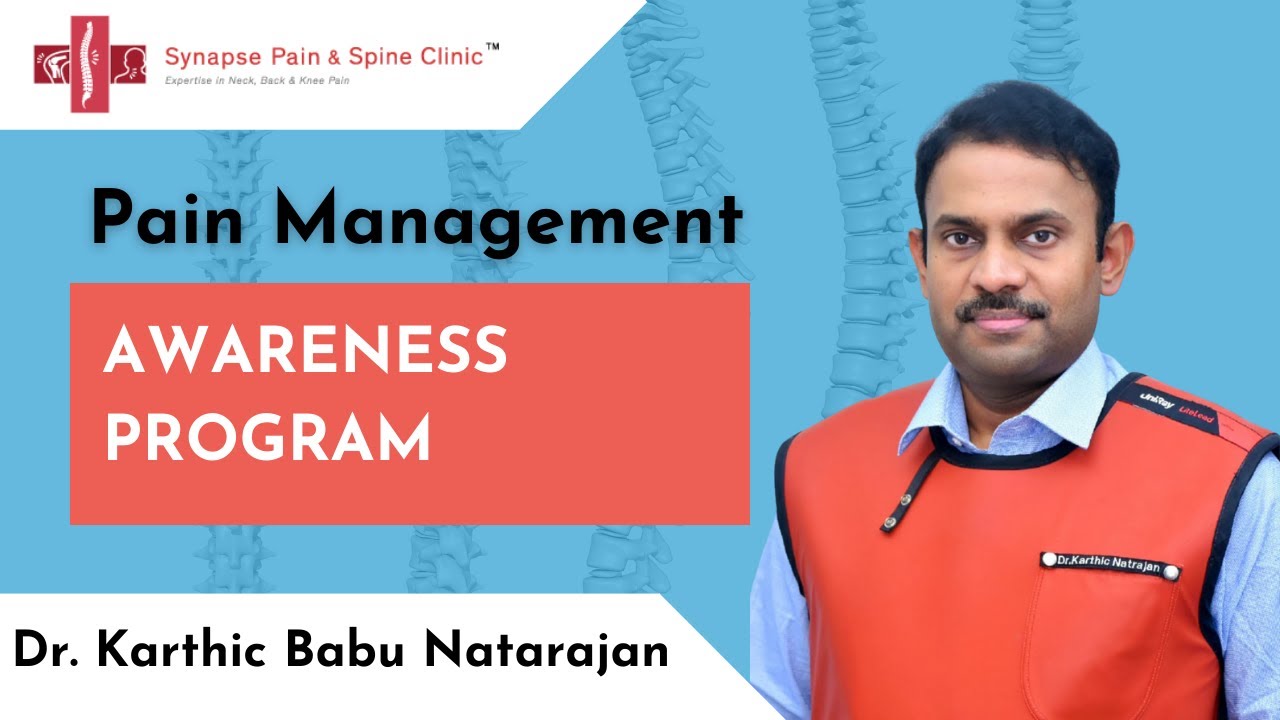
Pain Management Awareness Program by Dr Karthic Babu Natarajan – Pain & Spine Specialist
admin123 0 Comments Back Pain CHRONIC PAIN
hello good morning this is the Picatta nitrogen coming on facebook lives this is more a patient related pain management awareness program done on the beautiful and wonderful vocation of India’s independence day now we are all proud Indians and I am expressing my heartfelt Independence Day wishes to all of you so happy Independence Day to all those who are watching from India now the idea of doing this program is to increase awareness about freedom from pain and the idea is to increase awareness about back pain so I’m a pain and spine physician so treating pain is my business so that’s the whole idea now the way I have sequenced this Facebook live chat is I’ve made the announcement a few days ago and I have got a series of questions which I have with me right now now I’m going to go on and answer these questions in the beginning and then once I’m done maybe I will take the questions which are appearing as comments as we go along so the sequence of events that came about this we wanted to increase awareness about back pain and how it is managed now I told you the concept is freedom from pain and we were actually planning to do a series of facebook live chats so the freedom from back pain is the first in a series of lectures or like a facebook live chats that we are planning to do so I would be happy if people join in and send in your comments and send in your reviews about how the program is going and how we can take it forward from that okay so first of all I would like to thank all of those who have joined them I can see a lot of likes and I can see a lot of shares coming on right now so my time stall of you now before we start off just a little bit about back pain itself and how I do it so we see a lot of patients in our clinics about back pain I’m a full time pain physician so in my practice about 60 to 70 percent of patients who walk into my OPD back pain now generally when we see somebody with back pain one of the things that we want to do is we want to identify the cause as a physician and once that is done we try to confirm what the cost is in terms of clinical examination in terms of good history in terms of radiological confirmation and then we go about treating them now when we actually treat these patients till now what we were doing is pretty much what we were doing is we were treating them with medication we were treating them with physiotherapy we were treating them with muscle relaxants and neuropathy can NSAIDs sort of drugs and then those patients wouldn’t respond adequately to this these patients went in for surgery now the idea of doing this is I’m a pain physician so I have a slightly newer modality of reading back pain and that is I sort of three patients with back pain through injections so one of these injections actually sit in so you’re going to see patients who come with my back pain I’m just putting it I’m sort of simplifying things a little bit we are going to see patients with mild back pain you’re gonna see patients with moderate back pain and patients with severe back pain I’m sort of simplifying this so probably the ones who have mild back pain I would probably treat only with medication physical therapy I give a lot of importance to physical therapy I have a full fledge to rehab team working in the clinic they do the stretches they do the strengthening and they do the posture correction that sort of thing and also the injections come in somewhere between the conservative management and the surgery itself so the injections we sort of treat patients through in terms of x-ray guided injections for back pain we do radiofrequency ablation we do local anesthetic injections we do PRP injections we inject stuff like Botox that sort of thing and also we do minimally invasive procedures like endoscopic diskectomy and then if nothing works we also have an auto petition in the clinic so if nothing works we go for spine surgery so this is the various gamut of treatment that we offer for somebody with back pain so I can see a few questions coming in right now so what I’m going to do is I have a set of questions which have already come in so I’m going to talk a little bit about what has already come in so the first question that came in was or the way I have categorized it was what are the common reasons for back pain and how do you prevent back pain okay so we’ll start with that what are the common reasons for back pain now we see a lot of patients who have a very sedentary lifestyle right now a lot of these patients office goers who have a very sedentary lifestyle and they do jobs like IT or they work in the bank and stuff like that where they’re very they have a very sedentary lifestyle and they sort of don’t have too much physical activity so this is the first group of patients who sit for 8 hours 9 hours in their jobs and they have back pain now the common question that people ask is how do you prevent somebody who has a sedentary lifestyle from having back pain we find that I work in Chennai so I work in the southern part of Chennai which is very close to the IT highways so we have a lot of software guys who work or who have a sitting job and will keep working for long periods of time who have back pain now how do you prevent that so one of the things that we suggest is get some physical activity going so the physical activity that I suggest in the Indian scenario for somebody is I suggest things like walking I suggest things like brisk walking I usually suggest them to get a good pair of shoes and start walking that is something that we commonly do the other things that will sort of suit you in an Indian scenario with somebody with that fame the physical activity in the second one that is suggest is yoga so yoga is something that we have had traditionally and whatever things we’ve had traditionally has been pretty much good so I usually suggest patients to undergo yoga ideally if you’re doing yoga you want somebody who has a reasonable amount of medical knowledge to train you just in case you are not trained you are not being trained in yoga’s by somebody who has some medical knowledge the basic dictum to follow is don’t do anything that’s too painful you don’t want to be stretching your back awkwardly when you’re having a bad back or you don’t want to be standing on your head if you’re having a bad neck pain so general dictum is don’t do anything that’s too too painful so that’s the general victim if you are doing yoga other things other than the walking and the yoga that I suggest generally ask the physical activities women so assuming is fantastic the good thing about swimming is either because of the buoyancy the way to sort of getting transmitted so it doesn’t put too much pressure on the lumbar spine itself or the knee joint so that’s sort of good so swimming isn’t fantastic with somebody with back pain and also when you actually swim a lot of people come and say oh no swimming how do I do this so normally what I suggest is even if you don’t know swimming if you can go and get some walking in the swimming pool that’s fantastic for you so swimming walking in this water aqua therapy that is fantastic the other gentle activity that I suggest is gentle games like shuttlecock battement and that sort of thing so usually for things that I suggest there is also another one called Tai Chi so I see the slow rhythmic Chinese sort of like a dance moment that’s something that we suggest as a physical activity for back pain so we were talking about prevention of back pains so the activities that I’ve suggested are walking yoga swimming and gentle games like shuttlecock or badminton once the physical activity you’ve taken care of I generally we advise physical activity for at least four to five times a week so that’s about half not in the morning that’s good once the physical activity aspect of it is taken care of whenever you’re working in your office one of the things that you want to do when you’re working is make sure you have a good chair in the office so by good chair I mean that you need to have a reasonably good back support and you our chair is at the correct height so when your chair is in the correct height you don’t have to be bending down or bending up that sort of thing and always make sure you have a reasonably good back support and your lower back is touching the chair or whatever support you have fully so you don’t want to be sitting in the tip of your chair and then leaning back which is something that we call a slouching so slouching is something that sort of aggravates and puts more pressure on the surrounding ligaments so that’s something that you want to be avoiding so get a good chat make sure the height of the chair is good and always make sure your lower back is touching the lumbar support the second thing that you want to remember about your chair is we angry guys actually call this the ergonomic chair the second thing you want to remember about the chair is you want something to keep your elbows on so this is called a hands support if you are working for long hours a hand support is a good idea that sort of gives you a little bit more control over how you’re working third thing is if you are using the most a lot of time make sure your wrist standing or the wrist is resting on your table before you hold the most you don’t want to be keeping your wrist in there and trying to move your mouse that’s going to put a lot of pressure on your wrist so the thing that I told you about her a good share with a good back support good height of chair with something to rest your hand and something to rest your wrist the other things that you want to remember are if you’re going to be using the computer a lot make sure you want to have the monitor at the correct level you don’t want to be having a monitor too much down or too much up so you want the monitor to be at the correct high level and also if you’re having if you’re sort of slightly short stage shirt make sure you have a support for your feet so that each University or feed comfortably other than that when you’re working for long hours the things that you want to remember are especially for people who work for eight nine hours stuff like that so the things that you want to remember are as much as possible try to take a periodic break when I say periodic break I’m essentially saying a break every 30 minutes or 40 minutes so try to go out and stretch yourself try to go to the loo try to do some try to go get some water that sort of thing try to not sit continuously for more than half an hour so that’s that’s a good idea so you sort of go take a walk and then come back and restart your work other than that general things that you want to avoid for back pain are to bring sufficient amount of water so sufficient amount of water by that I mean that you want to drink at least two point two to 2.5 liters of water that’s about eight glasses of water a day smoking is not a good idea if you have a back pain smoking smoking is supposed to reduce the blood circulation to the spine itself so you want reduce smoking and make sure you want ideally stop smoking the other things that you want to remember as a lifestyle change to prevent back pain are that you don’t want to be lifting too much heavy weights so what happens is when you actually stand there right bend your back codon and lift heavy weights it puts enormous amount of pressure on your back so you want to be careful when you’re treating I mean when you’re bending forward and lifting something heavy so ideally somebody with that and one of the things that I said you to my patients is if you really have a back pain and you have to loop something try not to bend your back and go don’t try as much as possible to bend your knees instead of the back so you keep your back straight go down by bending the knees whatever you want to lift get it as close to you as possible and then straighten it that sort of makes it’ll reduce the pressure on the lumbar spine itself and if it puts a little bit more pressure on the knee so that’s okay for patients with back pain and the way you travel is something that’s a factor in countries like India so generally what we suggest is the things like cars buses and trains and planes are fine now we get into trouble when we travel by something which is sort of putting a lot of pressure in terms of vibrations or jerking so if you are using the back roads of India which is sort of unavoidable one of the things that you want to keep in mind is you want to be a little bit careful when you’re using your two wheelers and you want to be a little bit careful when you’re using your three wheelers or if your vehicle does not have great shock absorbers that’s something you want to keep in mind you don’t want to have a bad back and go in a bad road and a bumpy right and that will sort of put more pressure on the discs that come with thee in that that abarim the lumbar spine and that that can aggravate your back pain so these are the general things that we advise in terms of lifestyle so I talked to you about how you sit in the office have you used an ergonomic chair how you take periodic breaks when you’re working and also how you commute and how you take care of your back bending forward and bending away the last thing in terms of prevention of back pain that I want to mention to you is the sort of bed mattress that you guys have at home so when using a bed mattress one of the things that you want to keep in mind is you want your bed mattress to be reasonably firm or hard not too soft you don’t want to be essentially sinking into the bed mattress itself so if you are using a mattress make sure it’s reasonably firm in my practice I recommend somebody with the medium-sized below so a reasonably firm mattress with a little medium-sized pillow is a good idea so to some of the things that I told you in terms of prevention of back pain are good physical activity I talked to you about exercises yoga I talk to you about [Music] gentle sports brisk walking swimming ergonomic chair to prevent your how you sit in the office and long periodic breaks and also have you commute so these are the things that I talked to you about in terms of through preventing back pain itself now when you talk about the common reasons for back pain as a doctor who treats back pain we see patients who come with something that we call as a mechanical back pain so mechanical back pain is something where there’s something mild wrong with the surrounding muscles and ligaments so we need to work on what’s wrong with the muscles and ligaments and sort of try to treat them with muscle relaxants pain killers posture correction physical therapy that sort of thing we also find things that are structurally long in terms of things that are wrong something is wrong with the bone itself we get things like sometimes we get what you bone fractures we get facet arthritis we get sacroiliac joint arthritis sometimes there is a problem with the disc which is basically a cushion between the intervertebral bones itself you have multiple bones in the spine in between each of these bones you have a cushion that’s called a spine to vertebral disc sometimes you may have problems with the intervertebral discs so you want to be a little bit careful if you are treating somebody with a disc herniation now the other thing that you want to keep in mind are we actually try to assess these patients first with a good as soon as the patient enters the doctor’s clinic we get a good clinical history we do we do a detailed orthopedic and neurological examination and then we actually go ahead and do the investigation the investigation could be in the form of x-ray it could be in the form of a CT or it could be in the form of an MRI once we have a reasonably accurate diagnosis we sort of go ahead and treat patients so that’s T common reasons and ways to prevent somebody with back pain now the second question that I have caught with me is what is the dis prolapse now this prolapse is one of the common reasons for back pain now what happens is I just talked to you about intervertebral discs now intervertebral this basically the shock absorber between the bones in the lumbar spine now what happens is when you find somebody with a lumbar spine and you have the intervertebral disc which is it’s basically a structure that’s sort of here so you have multiple bones and this so when you have a herniation of one of these structures here this sort of squeezes out goes back and it touches the spinal cord itself and the spinal nerve that goes down so you have something which is called as a pinched nerve so when you have a pinched nerve the nerve which are that in the lower back so this is your lower back here when you have a pinched nerve in the lower back what are you going to get is wherever this nerve is going you’re going to get symptoms so when I talk about symptoms for a pinched nerve the symptoms are what we call a shy Attica so somebody with the lower back with pain radiating down is called sciatica so what happens is you’re gonna have symptoms like a tingling numbness radiating down the legs so when you have symptoms like that you suspect a pinched nerve the most common cause for a pinched nerve in the back or the most common cause for sciatica is somebody with a back pain with sore disc herniation which is pinching the no so this is the reason why we get patients so usually these patients present with lower back pain this pain is radiating to the buttocks back of the thigh back of the knee and sometimes after the toes and also you may find that these patients other than the pain also have a little bit of tingling a little numbness and in severe cases this patients may have motor weakness motor weakness is something where they are not able to move the toes when you’re able to ask them to move the ankle they’re not able to do that and sometimes if the disc herniation itself is very severe and the entire cord is compressed you may get something where the patients are not able to control their urination and defecation so essentially if I were to simplify things somebody with the mild disc herniation presents with a bit of back pain which is going down to the thighs and going down to the cough muscle sometimes these patients also have a bit of tingling and numbness the ones with a little bit moderate disc herniation along with the pain radiating down the legs also have some motor weakness ones with severe compression are the ones that have significant what are weakness they’re not able to move the ankle you have something which we guys call it a foot drop so you’re not able to move your foot up and down and you may also have difficulty in controlling your urine and stuff like that so this is how we grossly sort of differentiate what is the this collapse itself so you want to consult your doctor it could be a pain physician it could be author physician it could be it could be an author position it could be a neuro neurologist or a neurosurgeon and then you can take it from there in terms of treatment so usually we’ll get an x-ray and an MRI then we may do a basic group of blood tests and then we will treat you according to water test the second question in terms of this prolapse that of common is the how do you treat disc herniation so I told you I’ve sort of broadly classified disc herniation and two mild moderate and severe in terms of symptoms I told you the mild ones pretty much have pain radiating down the legs the moderate ones have along with the pain they may also have a bit of numbness in the legs the severe ones have motor weakness in terms of not able to move their and having difficulty in controlling the urines and motion and that sort of stuff so generally treatment wise if you see for a disco nation the things that you want to do are we do conservative management majority of the time when they come initially itself to treat the patients conservatively so somebody with back pain the first thing that I do is I teach them some lifestyle changes I teach them how to take care of them back one second is I treat them in terms of correcting the posture so the physio team works on them to correct the posture we also treat them with mild pain killers muscle relaxant that sort of thing once that is done a group of patients with mild disease they sort of become alright with that so that’s pretty much what we offer the ones that don’t respond adequately to fish with back with physiotherapy physical therapy and rehabilitation and the ones that in spite of medication and physical therapy have back pain are the ones in which we go hello good morning this is the piccata nitrogen coming on Facebook lives this is more a patient related pain management awareness program done on the beautiful and wonderful vocation of India’s independence day now we are all proud Indians and I am expressing my heartfelt Independence Day wishes to all of you so happy Independence Day to all those who are watching from India now the idea of doing this program is to increase awareness about freedom from pain and the idea is to increase awareness about back pain so I’m a pain and spine physician so treating pain is my business so that’s the whole idea now the way I have sequenced this Facebook live chat is me the announcement a few days ago and I have got a series of questions which I have with me right now now I’m going to go on and answer these questions in the beginning and then once I’m done maybe I will take the questions which are appearing as comments as we go along so the sequence of events that came about this we wanted to increase awareness about back pain and how it is managed now I told you the concept is freedom from pain and we were actually planning to do a series of facebook live chats so the freedom from back pain is the first in a series of lectures now or like Facebook live chats that we are planning to do so I would be happy if people join in and send in your comments and send in your reviews about how the program is going and how we can take it forward from that okay so first of all I would like to thank all of those who have joined them I can see a lot of likes and I can see a lot of shares coming and right now so my times to all of you now before we start off just a little bit about back pain itself and how I do it so we see a lot of patients in our clinics about back pain I’m a full time pain physician so in my practice about 60 to 70 percent of patients who walk into my OPD back pain now generally when we see somebody with back pain one of the things that we want to do is we want to identify the cause as a physician and once that is done we try to confirm what the causes in terms of clinical examination in terms of good history in terms of radiological confirmation and then we go about treating them now when we actually treat these patients till now what we were doing is pretty much what we were doing is we were reading the with medication we were treating them with physiotherapy we were treating them with muscle relaxants and neuropathic and NSAIDs sort of drugs and then those patients wouldn’t respond adequately to this these patients went in for surgery now the idea of doing this is I’m a pain physician so I have a slightly newer modality of reading back pain and that is I sort of three patients with back pain through injections so one of these injections actually sit in so you’re going to see patients who come with mild back pain I’m just putting it I’m sort of simplifying things a little bit we are going to see patients with mild back pain you’re going to see patients with moderate back pain and patients with severe back pain I’m sort of simplifying this so probably the ones who have my back pain I would probably treat only with medication physical therapy I give a lot of importance to physical therapy I have a full fledge to rehab team working in the clinic they do the stretches they do the strengthening and they do the posture correction that sort of thing and also the injections come in somewhere between the conservative management and the surgery itself so the injections we sort of treat patients through in terms of x-ray guided injections for back pain we do radiofrequency ablation we do local anesthetic injections we do PRP injections we inject stuff like Botox that sort of thing and also we do minimally invasive procedures like endoscopic diskectomy and then if nothing works we also have an ortho petition in the clinic so if nothing works we go for spine surgery so this is the various gamma cuff treatment that we offer for somebody with back pain so I can see a few questions coming in right now so what I’m going to do is I have a set of questions which have already come in so I’m going to talk a little bit about what has already come in so the first question that came in was or the way I have categorized it was what are the common since for back pain and how do you prevent back pain okay so we’ll start with that what are the common reasons for back pain now we see a lot of patients who have a very sedentary lifestyle right now a lot of these patients are office goers who have a very sedentary lifestyle and they do jobs like IT or they work in the bank and stuff like that where they’re very they have a very sedentary lifestyle and they sort of don’t have too much physical activity so this is the first group of patients who sit for 8 hours 9 hours in their jobs and they have back pain now the common question that people ask is how do you prevent somebody who has a sedentary lifestyle from having back pain we find that I I work in Chennai so I work in southern part of Chennai which is very close to the IT highway so we have a lot of software guys who work who have a sitting job and we’ll keep working for long periods of time and who have back pain now how do you prevent that so one of the things that we suggest is get some physical activity going so the physical activity that I suggest in the Indian scenario for somebody is I suggest things like walking I suggest things like brisk walking I usually suggest them to get a good pair of shoes and start walking that is something that we commonly do the other things that will sort of suit you in an indian scenario with somebody with back pain the physical activity the second ones that is suggest is yoga so yoga is something that we have had traditionally and whatever things we have had traditionally has been pretty much good so I usually suggest patients to undergo yoga ideally if you’re doing yoga you want somebody who has a reasonable amount of medical knowledge to train you just in case you are not trained you are not being trained in yoga by somebody who has some medical knowledge the basic dictum to follow is don’t do anything that’s too painful you don’t want to be stretching your back awkwardly when you’re having a bad back what you don’t want to be ending on your head if you’re having a bad neck pain so general dictum is don’t do anything that’s too too painful so that’s the general victim if you are doing yoga other things other than the walking and the yoga that I suggest generally ask the physical activities with me so swimming is fantastic the good thing about swimming is because of the buoyancy the weight is sort of getting transmitted so it doesn’t put too much pressure on the lumbar spine itself or the knee joint so that’s sort of good so swimming isn’t fantastic with somebody with back pain and also when you actually swim a lot of people come and say oh no swimming how do I do this so normally what I suggest is even if you don’t know swimming if you can go and get some walking in the swimming pool that’s fantastic for you so swimming walking in this water aqua therapy that is fantastic the other gentle activity that I suggest is gentle games like shuttlecock battement and that sort of thing so usually four things that I suggest there is also another one called Tai Chi so Tai Chi is a slow rhythmic Chinese sort of like a dance moment that’s something that we suggest as a physical activity for back then so we were talking about prevention of back pains so the activities that I’ve suggested are walking yoga swimming and gentle games like shuttlecock or badminton once the physical activity you’ve taken care of I generally advise physical activity for at least four to five times a week so that’s about half an hour in the morning that’s good once the physical activity aspect of it is taken care of whenever you’re working in your office one of the things that you want to do when you’re working is make sure you have a good share of the office so buy good share I mean that you need to have a reasonably good back support and your chair is at the correct height so when your chair is in the correct height you don’t have to be bending down or bending up that sort of thing and always make sure you have a reasonably good back support and your lower back is touching the chair or our support you have fully so you don’t want to be sitting in the tip of your chair and then leaning back which is something that we call a slouching so slouching you something that sort of aggravates and puts more pressure on the surrounding ligaments so that’s something that you want to be avoiding so get a good chat make sure the height of the chair is good and always make sure your lower back is touching the lumbar support the second thing that you want to remember about your chair is we angry guys actually call this the ergonomic chair the second thing you want to remember about the chair is you want something to keep your elbows on so this is called a hand support if you are working for long hours a hand support is a good idea that sort of gives you a little bit more control over how you are working third thing is if you are using the most a lot of time make sure your wrist standing or the wrist is resting on your table before you hold the most you don’t want to be keeping your wrist in there and trying to move your mouse that’s going to put a lot of pressure on your wrist so the thing that I told you about her a good share with a good back support good height of chair with something to rest your hand and something to rest your wrist the other things that you want to remember are if you are gonna be using the computer a lot make sure you want to have the monitor at the correct level you don’t want to be having a monitor too much down or too much up so you want the monitor to be at the correct high level and also if you’re having if you sort of slightly short stage shirt make sure you have a support for your feet so that you can rest your feet comfortably other than that when you’re working for long hours the things that you want to remember are especially for people who work for eight nine hours stuff like that so things that you want to remember are as much as possible try to take a periodic break when I say periodic break I’m essentially saying a break every 30 minutes or 40 minutes so try to go out and stretch yourself try to go to the loo try to do some try to go get some water that sort of thing try to not sit continuously for more than half an hour so that’s that’s a good idea so you sort of go take a walk and then come back and restart your work other than that general things that you want to avoid for back pain are to bring sufficient amount of water so sufficient amount of water by that I mean that you want to drink at least 2 point 2 to 2.5 liters of water that’s about 8 glasses of water a day smoking is not a good idea if you have a back pain smoking smoking is supposed to reduce the blood circulation to the spine itself so you want to reduce smoking issue you want ideally stop smoking the other things that you want to remember as a lifestyle change to prevent back pain are that you don’t want to be lifting too much heavy weights so what happens is when you actually stand there right bend your back go down and lift heavy weights it puts enormous amount of pressure on your back so you want to be careful when you’re treating I mean when you’re bending forward and lifting something heavy so ideally somebody with that and one of the things that I suggest to my patients is if you really have a back pain and you have to loop something try not to bend your back and go don’t try as much as possible to bend your knees instead of the back so you keep your back straight go down by bending the knees whatever you want to lift get it as close to you as possible and then straighten it that sort of makes it will reduce the pressure on the lumbar spine itself and if it puts a little bit more pressure on the knee so that’s ok for patients with back pain and the way you travel is something that’s a factor in countries like India so generally what we suggest is the things like cars buses and trains and planes are fine now we get into trouble when we travel by something which is sort of putting a lot of pressure in terms of vibrations or jerking so if you are using the bad roads of India which is sort of unavoidable one of the things that you want to keep in mind is you want to be a little bit careful when you’re using your 2 wheeler then you want to be a little bit careful when you’re using your three wheelers or Rachel does not have a great shock absorbers that’s something you want to keep in mind you don’t want to have a bad back and go in a bad road and a bumpy ride and that will sort of put more pressure on the discs that come with thee in that that abarim their lumbar spine and that that can aggravate your back pain so these are the general things that we advise in terms of lifestyle so I talked to you about how you sit in the office have you used in ergonomic chair how you take periodic breaks when you’re working and also how you commute and how you take care of your back bending forward and bending away the last thing in terms of prevention of back pain that I want to mention to you is the sort of bed mattress that you guys have at home so when using a bed mattress one of the things that you want to keep in mind is you want your bed mattress to be reasonably firm or hard not too soft you don’t want to be essentially sinking into the bed mattress itself so if you are using a mattress make sure it’s reasonably firm generally my practice I recommend somebody with a medium size pillow so a reasonably firm mattress with a with a medium size pillow is a good idea so to some of the things that I told you in terms of prevention of back pain are good physical activity I talked to you about exercises yoga I talk to you about gentle sports brisk walking swimming ergonomic chair to prevent your how you sit in the office and long periodic breaks and also have you commute so these are the things that I talk to you about in terms of preventing back pain itself now when you talk about the common reasons for back pain as a doctor who treats back pain we see patients who come with something that we call as the mechanical back pain so mechanical back pain is something where there’s something mild wrong with the surrounding muscles and ligaments so we need to work on what’s wrong with the muscles and ligaments and sort of try to treat them with muscle relaxants pain killers posture correction physical therapy that sort of thing we also find things that are structurally long in terms of things that are wrong something is wrong with the bone itself we get things like sometimes we get vertebral bone fractures we get facet arthritis we get sacroiliac joint arthritis sometimes there is a problem with the disc which is basically a cushion between the intervertebral bones itself you have multiple bones in the spine in between each of these bones you have a cushion that’s called a spine two vertebral discs sometimes you may have problems with the intervertebral discs so you want to be a little bit careful if you are treating somebody with a disc herniation now the other thing that you want to keep in mind are we actually try to assess these patients first with a good as soon as the patient enters the doctors clinic we get a good clinical history we do a we do a detailed orthopedic and neurological examination and then we actually go ahead and do the investigation the investigation could be in the form of x-ray it could be in the form of a CT or it could be in the form of an MRI once we have a reasonably accurate diagnosis we sort of go ahead and treat patients so that’s the common reasons and ways to prevent somebody with back pain now the second question that I have caught with me is what is the distal apse now this prolapse is one of the common reasons for back pain now what happens is I just talked to you about intervertebral discs now intervertebral discs basically the shock absorber between the bones in the lumbar spine now what happens is when you find somebody with a lumbar spine and you have the intervertebral disc which is it’s basically a structure that’s sort of here so you have multiple bones and this so when you have a herniation of one of these structures here this sort of squeezes out goes back and it touches the spinal cord itself and the spinal nerve that goes down so you have something which is called as a pinched nerve so when you have a pinched nerve the nerve which are that in the lower back so this is your lower back here when you have a pinched nerve in the lower back what are you gonna get tears wherever this nerve is going you’re gonna get symptoms so when I talk about symptoms for a pinched nerve the symptoms are what we call a shy Attica so somebody with the lower back with pain radiating down is called sciatica so what happens is you’re gonna have symptoms like a tingling numbness radiating down the legs so when you have symptoms like that you suspect a pinched nerve the most common cause for a pinched nerve in the back or the most common cause for sciatica is somebody with a back pain with sore disc herniation which is pinching the no so this is the reason why we get patients so usually these patients present with lower back pain this pain is radiating to the buttock back of the thigh back up the knee and sometimes after the toes and also you may find that these patients other than the pain also have a little bit of tingling a little bit of numbness and in severe cases this patients may have motor weakness motor weakness is something where we’re not able to move the toes when you’re able to ask them to move the ankle they’re not able to do that and sometimes if the disc herniation itself is very severe and the entire cord is compressed you may get something where the patients are not able to control the urination and defecation so essentially if I were to simplify things somebody with a mild disc herniation presents with a bit of back pain which is going down to the thighs and going down to the cough muscle sometimes these patients also have a bit of tingling and numbness the ones with a little bit moderate disc herniation along with the pain radiating down the legs also have some motor weakness the ones with severe compression are the ones that have significant motor weakness they’re not able to move that you have something which we guys call a food drop so you’re not able to move your foot up and down and you may also have difficulty in controlling your urine and stuff like that so this is how we grossly sort of differentiate what is the disc prolapse itself so you want to consult your doctor it could be a pain physician it could be a physician it could be it could be an art of addition it could be an ER or neurologist order neurosurgeon and then you can take it from there in terms of treatment so usually we’ll get an x-ray and an MRI then we may do a basic group of blood tests and then we will treat you according to water test the second question in terms of this prolapse that have come in is the how do you treat disc herniation so I told you have sort of broadly classified disc herniation into mild moderate and severe in terms of symptoms I told you the mild ones pretty much have they ain’t radiating down the legs the moderate ones have along with the pain they may also have a bit of numbness in the legs the severe ones have motor weakness in terms of not able to move their ankle and having difficulty in controlling their urine sand motion and that sort of stuff so generally treatment wise if you see for a disc herniation the things that you want to do are we do conservative management majority of the time when they come initially itself to treat the patients conservatively so somebody with back pain the first thing that I do is I teach them some lifestyle changes I teach them how to take care of them back.one second is I treat them in terms of correcting the posture so the physio team works on them to correct the posture we also treat them with my pain killers muscle relaxant that sort of thing once that is done a group of patients with mild disease they sort of become alright with that so that’s pretty much what we offer the ones that don’t respond adequately to fish with back with physiotherapy physical therapy and rehabilitation and the ones that in spite of medication and physical therapy have back pain are the ones in which we go